
The United Way of Connecticut 211 released new data Wednesday showing that the state’s overall childcare capacity remains stable, though certain childcare slots still need to be added.
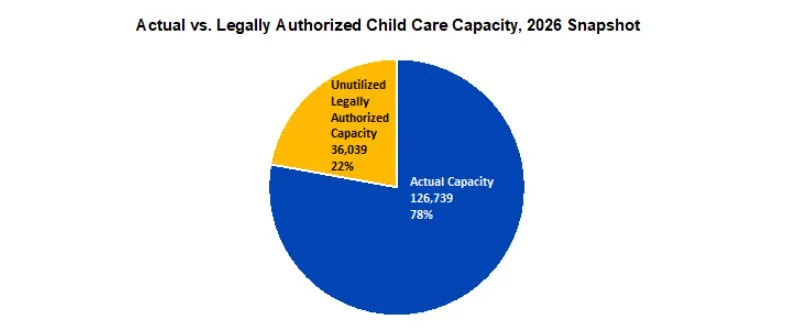
About 78% of the state’s childcare programs are currently operating at full legal, authorized capacity, a level on par with 2025 and a 4% increase from 2024, the report found.
Increases in slots stem largely from two factors:
- Increased funding: The Connecticut Office of Early Childhood launched Early Start CT in July 2025, combining three previously state-funded programs into one and adding about 1,000 new state-funded care slots.
- New Kindergarten entry age: Starting July 2024, children must turn five by Sept. 1 to enter Kindergarten. This change potentially kept 33% more children in preschool, driving up demand for pre-K slots.
The report found that about 36,000 legally authorized slots, or 22%, remain unavailable to families.
The programs not operating at full enrollment cite the following main factors in the report:
- Affordability Challenge for Families– Child care costs are unaffordable for many working families. They may earn too much to qualify for a subsidy and too little to pay market rates.
- Many Families Waiting for Care 4 Kids Subsidy– Eligible families face an average eight-month wait for subsidy. The program currently helps about 22,000 families pay for care.
- Public Preschool or Magnet Schools Offering Low-Cost Care– Programs are losing 3 to 5 year olds to public school programs.
- Staffing shortages– Limited staffing is preventing certain programs from operating at full capacity.
- Programs Choosing to Operate at Lower Capacity– Programs said they may not operate at full capacity to maintain quality and meet a child’s individual needs.
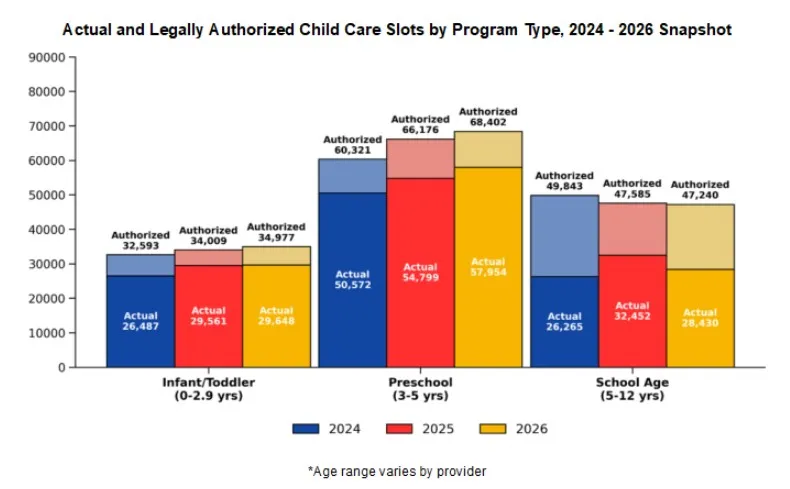
“The good news is that over the past two years Connecticut has increased the supply of early care and education for children under five by 10,543 seats, a 13.7% increase,” said Merrill Gay, executive director of the Connecticut Early Childhood Alliance.
“The bad news is that many programs are facing real difficulty enrolling children. The eight-month waitlist for Care 4 Kids has had a substantial impact on families with infants and toddlers. There were 1,938 fewer children under age 3 receiving a Care 4 Kids child care subsidy in January 2026 than a year earlier. Family child care homes are experiencing the worst of it, serving almost a thousand fewer children than last year and are just 55% enrolled, raising real questions about their ongoing economic viability,” he continued.
Read the full report in the link below: