
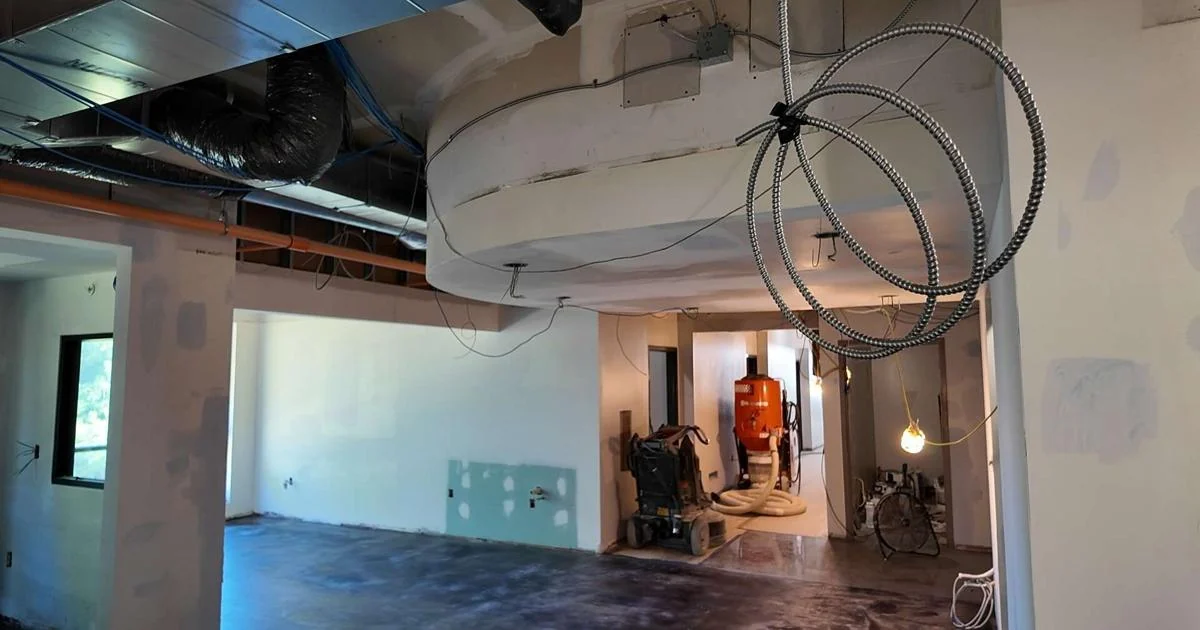
The Salvation Army’s Center of Hope in Jefferson City is preparing to nearly double its capacity in response to growing demand for shelter services, particularly as falling temperatures intensify the need for safe housing among the city’s homeless population.
According to Melinda Jennings, Director of Development at the Jefferson City Salvation Army, the shelter has been operating at full capacity for an extended period of time. The planned expansion will increase the number of available beds from 31 to 62, with the renovated facility accommodating 25 beds for men, 17 beds for women, and a dedicated family wing capable of housing four families across a total of 20 beds.
These structural changes are designed to provide families with their own dedicated living space while allowing individual residents to return to separate accommodations. Previously, the 31-bed facility struggled to meet the simultaneous needs of individuals and families, often resulting in people being turned away.
“We’ve been at capacity for quite a while,” Jennings said. “We were even having to turn families away,and so families, individuals,we were bursting at the seams and couldn’t bring anybody else in.”
The renovation extends beyond simply adding beds. Both the men’s and women’s wings will feature individual rooms equipped with private bathrooms and showers, replacing the previously shared restroom facilities. Family rooms will similarly include private bathrooms. Jennings described these upgrades as intentional efforts to restore residents’ sense of privacy and dignity.
“When people come and stay with us, they may have past traumas, and we want to see how we can help them move forward and what we can do to help with the healing process,” Jennings said during a tour of the facility.
The project also includes a significant expansion of the Salvation Army’s food pantry, growing from approximately 546 square feet to 2,500 square feet. Rather than distributing pre-packed boxes, the updated pantry will operate on a client-choice model, allowing visitors to select the specific items they need. Jennings noted that this approach will be open to the broader community and is intended to function much like a personalized shopping experience.
“That cuts back on waste because if you give someone something that isn’t good for their diet and they don’t want to eat, we don’t want them just throwing it away,” Jennings said.
Scott Johnston, President of the Board of Directors for Housing the Community Jefferson City, noted that homelessness in the area has steadily increased since the 2019 tornado and the subsequent COVID-19 pandemic. His organization operates Room at the Inn, an emergency shelter serving individuals who may not meet the Salvation Army’s intake requirements.
Room at the Inn originally launched with 12 beds at Catholic Charities before expanding to 15. The shelter later relocated to First Baptist Church downtown, where it has operated for the past five years. Johnston confirmed that the shelter currently maintains 20 beds and is typically at full occupancy.
Johnston emphasized that the Salvation Army’s expansion will be particularly significant for women and families with children , populations that Room at the Inn is not currently equipped to serve due to its low-barrier intake model.
“Being a low-barrier shelter means that we don’t do a lot of screening in terms of criminal background, so we can’t serve children,” Johnston said. “And so given that we also accept people that maybe don’t fit the criteria or the expectations of Salvation Army, we’re looking forward to them opening.”
As temperatures continue to decline, securing a warm daytime location presents an additional challenge for individuals experiencing homelessness. Johnston noted that Room at the Inn closes each morning, requiring residents to seek alternative locations throughout the day, with the public library serving as one of the few available options for escaping the cold.
Jennings acknowledged that the shelter’s demographic tends to shift as the seasons change.
“We’ll start to see a little bit of different faces and new faces that we’re here to help,” Jennings said.
The organization is hopeful that its additional beds and emergency cots will help accommodate the anticipated increase in demand. The shelter is currently housing approximately 20 residents while renovations remain ongoing. Construction is expected to be completed by mid-December, with new furniture scheduled to arrive by the end of that month. The Salvation Army intends to gradually transition more residents into the renovated spaces as they become available, though an official date for the full transfer has yet to be announced.