The Save Dallas City Hall Coalition is preparing to make a significant announcement on Wednesday regarding a petition that has reportedly gathered sufficient signatures to potentially force a public vote on the future of Dallas City Hall in May.
The coalition was required to collect more than 20,000 signatures within a 60-day period to place the proposal on the ballot, an effort that commenced on October 2. The gathered signatures are set to be delivered to Dallas City Secretary Bilierae Johnson for official review.
The petition seeks to allow city operations to continue within the historic structure; however, city officials have indicated that the building requires in excess of $600 million in repairs. Several city council members have expressed the view that relocating from the current premises to an alternative facility would prove less costly to the city and its taxpayers than remaining in the building, undertaking the necessary repairs, and bringing it into compliance with modern standards.
In August, the Save Dallas City Hall Coalition filed a lawsuit in an effort to compel city leaders to carry out those repairs.
Why does the coalition want to save Dallas City Hall?
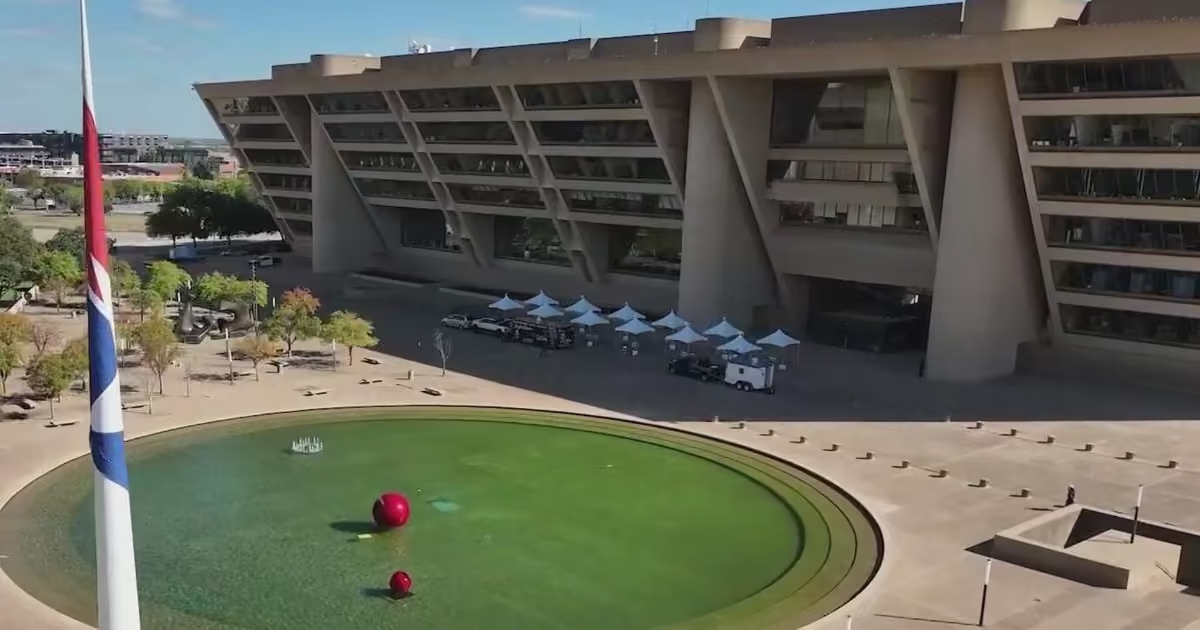
Dallas City Hall, completed in 1978, was designed by celebrated architect I.M. Pei, who, as the coalition highlights in its lawsuit, is responsible for numerous other iconic structures. His body of work includes the Louvre Pyramid in Paris, France; the Bank of China Tower in Hong Kong; the National Gallery of Art’s East Building in Washington; and the John F. Kennedy Library in Boston.
The coalition specifically identifies Dallas City Hall as a distinguished example of Modernist and Brutalist architecture. The building is widely recognized for its inverted trapezoidal form, which the coalition asserts is without precedent among city halls across the United States. Furthermore, the structure was built in the years following the 1963 assassination of President John F. Kennedy in Dallas , a fact the coalition regards as symbolic of the city’s determination to rebuild and redefine its national identity in the aftermath of that tragedy.
The coalition further notes that the building’s significance extends well beyond its civic function. Dallas City Hall served as a filming location in the original “RoboCop” films and in the 1980 television movie “The Lathe of Heaven.” It also served as the architectural inspiration for the J. Erik Jonsson Central Library building, situated directly across the street from City Hall.