
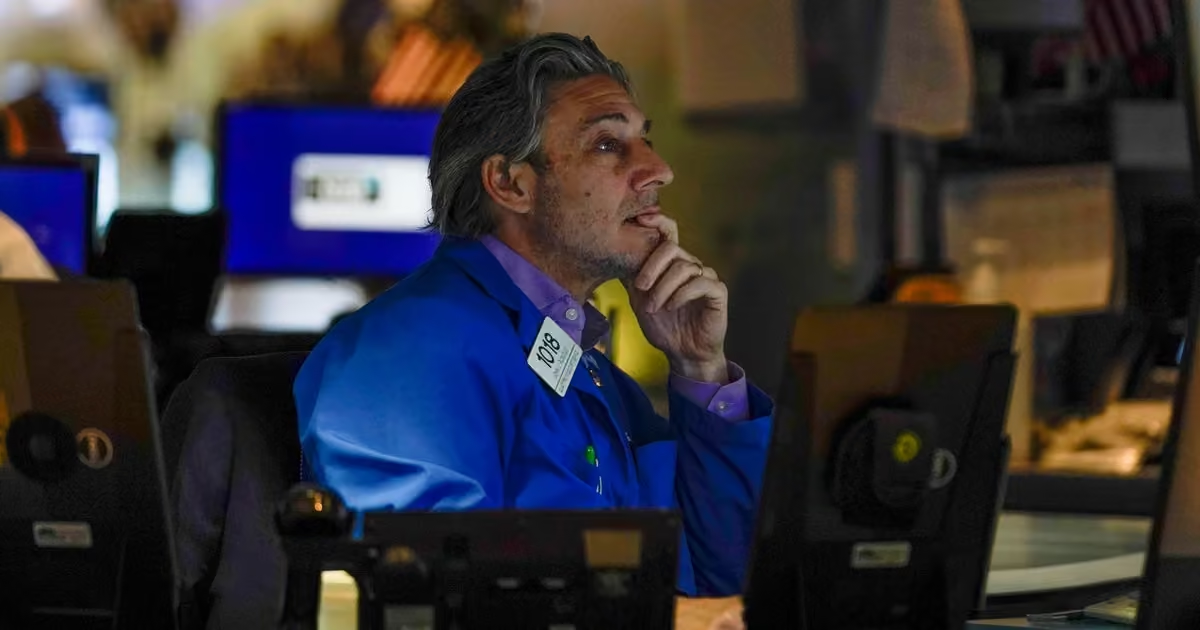
Equity markets recovered a portion of their recent losses on Friday, following a sharp selloff the day prior that was largely driven by growing concerns over a potential deceleration in data center development.
The S&P 500 advanced 23 points, or 0.3%, closing at 7,377, though the gain was insufficient to offset the significant losses incurred on Thursday , the index’s worst single-day performance since April 2025. The technology-focused Nasdaq Composite finished the session up 1.1%, while the Dow Jones Industrial Average declined 0.5%.
“Tech is rebounding after two days of some of the most aggressive selling in a long time, although the rally is very tentative and tepid, without much aggressive chasing,” Adam Crisafulli, head of Vital Knowledge, said in a note to investors midday Friday.
Financial markets surged in the immediate aftermath of the midterm elections earlier in the week, only to reverse sharply on Thursday as investors began evaluating whether the Democrats’ decisive victories could translate into stricter regulations on data center construction and reduced expenditure on artificial intelligence.
While Democrats are set to hold majorities in both the House and Senate when newly elected members are sworn in during January, President Trump will retain his veto power, a factor that analysts on Wall Street noted would likely serve as a significant barrier to the enactment of sweeping data center restrictions. More immediate resistance, they suggested, is expected to emerge at the state and local levels.
As of Friday, voters across the country had passed more than 40 ballot measures placing restrictions on data centers in their respective communities, according to an analysis conducted by political research firm Redbud Consulting.
Technology stocks began to stabilize on Friday, providing upward momentum for the Nasdaq following a severe decline on Thursday that saw the index lose more than 1,400 points and officially enter correction territory , a term used to describe a decline of at least 10% from a prior peak.
Chipmaker Nvidia , widely regarded as a key indicator of the AI sector’s health , rose 2.5% during afternoon trading, while semiconductor manufacturer Micron Technology gained 3.9%. The major hyperscalers, the companies at the forefront of data center expansion, posted modest advances: Alphabet, the parent company of Google, climbed 0.8%; Amazon rose 0.9%; and Meta gained 2.1%. Microsoft, however, edged lower by 0.6%.
IREN, a provider of data centers, computing infrastructure, and software solutions for artificial intelligence training, reported quarterly results that exceeded market expectations. The company’s stock surged 19.2%, and management announced the signing of two new contracts following the close of the quarter.
“We own the land, the power and the data centers under all of it, which gives us more ways to fund growth and lets us set its pace,” co-CEO Daniel Roberts said.
Beyond the AI sector, broader market performance was uneven, with declining stocks outnumbering advancing ones among S&P 500 constituents.
Slowing AI investment?
A central question weighing on Wall Street is whether artificial intelligence companies will be able to generate the level of revenue growth that investors are currently anticipating. Anthropic, which submitted its initial public offering filing last month and is expected to make its Nasdaq debut this month, is poised to serve as an important benchmark. Although its filing underscored rapid expansion, the company has not yet achieved profitability.
In a research note published on Friday, Vicky Redwood, a chief economic adviser at Capital Economics, indicated that the firm anticipates AI will contribute positively to productivity, but expressed that it is “less confident that AI revenues will grow rapidly enough to sustain the current pace of investment.”
The firm projects that AI-related capital expenditures will moderate in the coming year, a trend that Redwood cautioned could exert downward pressure on overall U.S. economic growth.
Friday’s market recovery coincided with the release of the monthly employment report, which revealed strong payroll growth in October. Employers added 165,000 jobs during the month, surpassing economists’ forecasts, while the unemployment rate edged down to 4.1%.
The stronger-than-anticipated hiring figures have raised the likelihood that Federal Reserve officials will move to increase interest rates at their upcoming December meeting and again in 2027, according to economists on Wall Street.
“A solid October jobs report leaves the Fed free to focus on inflation. We expect rate increases in December and March, with energy and AI spillovers the main risks to inflation,” Oxford Economics said in a report.