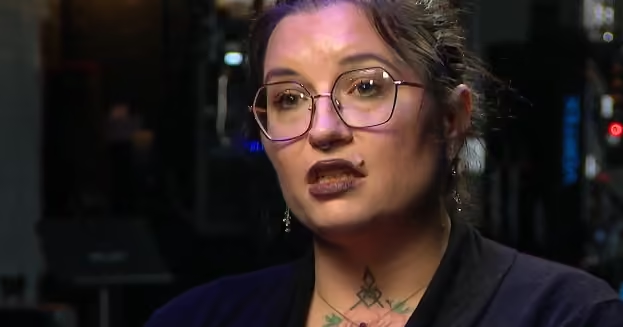
For years, Amanda Simpson kept her distance from Denton , the city where she raised her children, where school mornings and family routines shaped their daily lives, and where ordinary moments once felt permanent. It is also the place where, on May 16, 2018, authorities say her ex-husband killed their three children and her boyfriend before taking his own life. She returns today carrying a weight no parent should ever be forced to bear.
“I never imagined being back without my kids,” Simpson said.
The decision to return was not made lightly, but Simpson says she had a reason. This marks the first time she has shared her story in such depth on television. At the heart of her account is a sentence her ex-husband spoke in the moments before his death , words that have followed her every day since.
“As I am begging for him not to shoot me, he just stares at me with a gun pointed at me,” Simpson recalled. “He says, ‘I’m not going to kill you. I’m going to make you live with this.'”
Eight years later, those words have never left her.
The last night
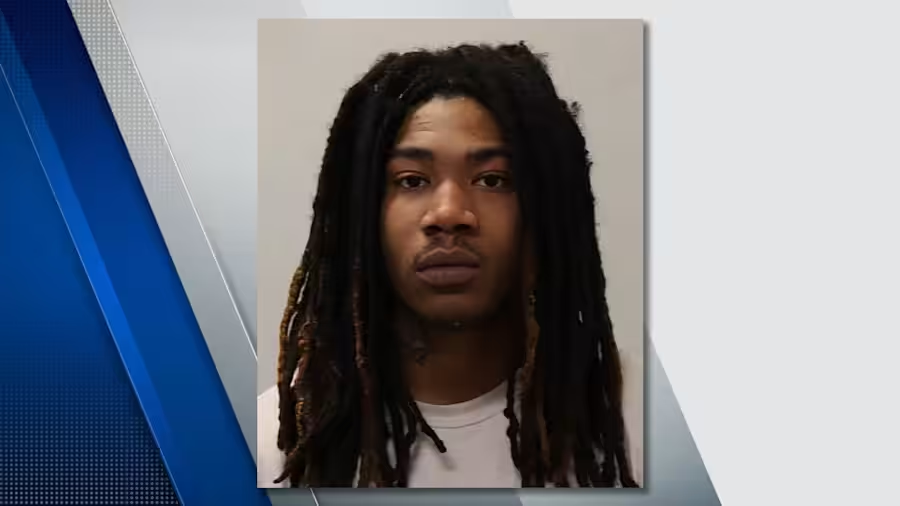
On May 15, 2018, Simpson spent what would become her final evening with her three children: 8-year-old Odin, 6-year-old Cadence, and 4-year-old Drake. Her ex-husband, Justin Painter, was also present that night.
During the drive home, Simpson says Painter raised the possibility of reconciliation.
“He was like, ‘After all this time, we can rekindle our marriage?'” She told him no. Shortly after, Simpson says he grabbed the steering wheel and attempted to force the vehicle into oncoming traffic.
The confrontation continued throughout the drive. That night, the children remained with their father in accordance with a court-ordered custody arrangement.
“That was the last time I saw them,” she said.
She remembers Cadence wanting to stay a little longer.
“Mommy, I want to spend more time with you,” Simpson recalled her daughter saying. She gently reminded her that the arrangement had been ordered by a judge.
“So I head back to Ponder. I’m not thinking anything of it. I’ll see you tomorrow.”
She never did.
The morning everything changed
The following morning, Painter did not bring the children to school. Instead, Simpson says he brought them to her home, where she and her boyfriend, Seth Richardson, were asleep.
At first, she thought she heard a transformer explode somewhere outside.
Then came more loud pops.
Then ringing.
Then confusion.
As the ringing in her ears began to fade, she heard a voice , and it was not Richardson’s.
“I hear, ‘Seth’s dead. The kids are dead.'” She turned and saw Richardson had been shot on the bed.
Standing in the doorway, she says, was Painter, holding a gun. Simpson recalls pleading desperately for her life.
Then came the words she says she will never forget. “I’m not going to kill you. I’m going to make you live with this.”
Moments later, Painter took his own life. At first, she prayed he had been lying. Then she walked through the house, where she found Drake, then Cadence, and then Odin.
Within moments, four people she loved were gone.
Looking Back
Today, Simpson says she recognizes warning signs she did not fully understand while she was living through them.
“I wasn’t allowed to have friends,” she said. “I couldn’t spend money. I wasn’t allowed to have a job. He needed to know everywhere I was going.”
Reflecting on those years, she believes there were signals that warranted far greater attention from those in a position to act. One issue continues to weigh heavily on her , the firearm.
According to Simpson, Painter had previously used the gun during an incident in which she says she contacted law enforcement after he exhibited suicidal behavior.
During the custody proceedings, she says, “He wanted the kids and his firearm.”
When asked whether a judge permitted him to retain the firearm, Simpson answered simply: “Yes.”
Building a life beyond tragedy
Following the killings, Simpson relocated to Virginia to be closer to family. The process of healing has been long, and it remains ongoing.
On her arm is a tattoo honoring Odin, Cadence, and Drake. Surrounding them are tributes to two more children who have come into her life in the years since.
“It has all my children. All five of them,” she said.
Today, she sees pieces of the three children she lost reflected in the two she is raising. She also speaks of a “bonus” daughter who has become part of her new blended family.
“Odin, Cadence and Drake shine through my kids now,” she said. “My children have always been my purpose. They will forever be my purpose.”
But her sense of purpose has grown to extend well beyond her own family.
Why she came back
Simpson recently participated in Preventable, a documentary produced by the Battered Women’s Justice Project examining the intersection of domestic violence, firearms, and the warning signs that can precede deadly violence. Information about the documentary, survivor stories, and educational resources is available at bwjp.org and bwjp.org/our-work/preventable/.
The documentary poses a deeply difficult question: Could some of these deaths have been prevented?
According to the Battered Women’s Justice Project, more than 70 women are killed each month in the United States by an intimate partner using a firearm. The organization notes that survivors face a dramatically heightened risk when an abusive partner retains access to a gun.
When asked what she hopes viewers take away from the documentary, Simpson did not hesitate.
“Don’t give up,” she said. “If there’s signs, take them seriously. If nobody will listen, don’t shut up. Keep talking. Keep going to the courts. Keep doing what you have to do to make a change.”
Returning to Denton was her own decision. “This is where it happened.” And she wants people to understand why she felt compelled to come back.
“My plea for help was swept under the rug.”
“I live with it every single day”
Simpson is clear that her experience is not unique.
“We have hundreds of thousands of survivors that have gone through things they shouldn’t have gone through because somebody just wouldn’t listen,” she said.
Years have passed. The grief has not diminished.
“My story might have happened eight years ago, but I live with it every single day.” She paused. “I’m here. I’m breathing. My kids are not.”
A ring that never leaves her hand
There is one item Simpson rarely removes. A ring she wears every day contains pieces of her children’s first haircuts. It also holds a piece of the shirt Seth Richardson was wearing when he was killed.
She says it allows her to carry all four victims with her wherever she goes.
In Denton, she has no desire to revisit tragic headlines. Rather, she wants Odin, Cadence, Drake, and Seth to be remembered , and she wants other victims to know that there is still time to ask for help, and that tragedies like hers may be preventable.
What experts say people can learn from Amanda’s story
Amanda Simpson’s story is deeply personal, but advocates who work alongside victims of domestic violence say the warning signs she described are ones they encounter repeatedly in cases across the country. Many of the patterns she experienced , including control, threats of self-harm, access to firearms, and the barriers victims face when seeking help , are well-documented indicators of escalating danger.
Professionals in the fields of domestic violence prevention and victim advocacy have spoken to the significance of these themes, underscoring how critical it is for courts, law enforcement, and communities to take such warning signs seriously before irreversible harm occurs.
Resources For Help
For anyone experiencing domestic violence or seeking support, the following organizations offer confidential assistance:
The National Domestic Violence Hotline can be reached by calling 800-799-SAFE (7233), by texting START to 88788, or through their website at thehotline.org.
Denton County Friends of the Family operates a 24-hour crisis line at 940-382-7273, with a toll-free number at 800-572-4031. Their website is dcfof.org.
The Battered Women’s Justice Project, which produced the Preventable documentary, offers survivor resources and educational materials at bwjp.org/our-work/preventable/.
The Texas Health and Human Services Family Violence Program provides statewide assistance and shelter referrals for those in need of family violence resources across Texas.
The Texas Advocacy Project offers free legal assistance to survivors of domestic violence, sexual assault, and stalking. Their Legal Line can be reached at 800-374-HOPE (4673), and more information is available at texasadvocacyproject.org.