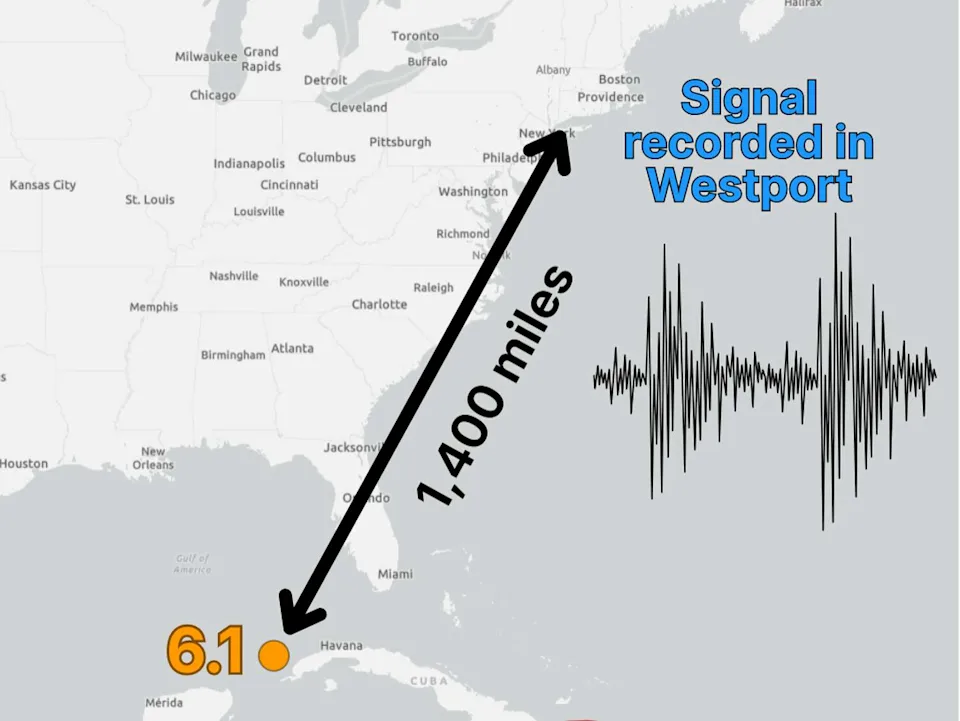
A magnitude 6.1 earthquake hit offshore near western Cuba Tuesday afternoon, and although the most intense shaking occurred far from Connecticut, the Westport Astronomical Society’s seismograph detected the quake’s signature more than 1,000 miles away.
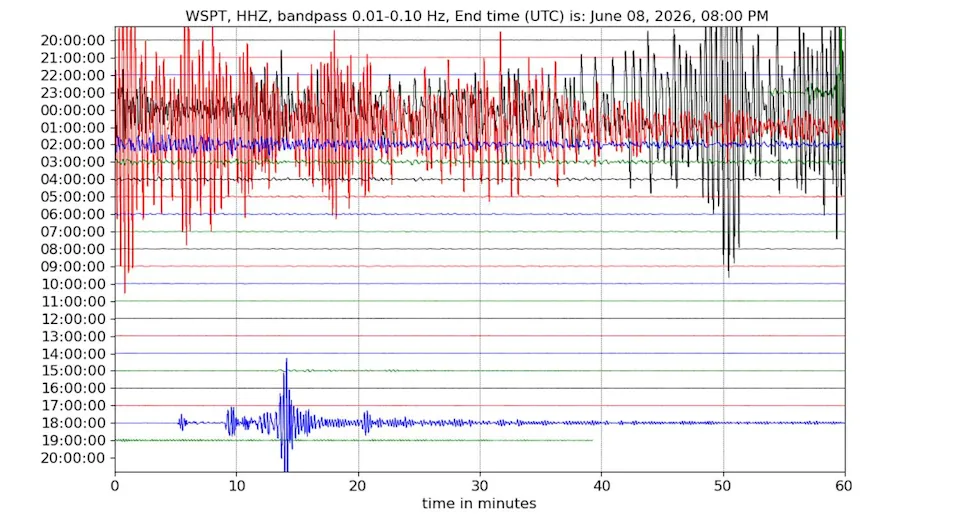
Here’s the fascinating part: earthquakes don’t just shake the ground near the epicenter. They send waves through and around the planet, much like dropping a pebble into a pond. The first waves to arrive are typically the fast-moving P-waves. Slower S-waves follow close behind. After those, the larger, rolling surface waves tend to appear as the most prominent wiggles on a seismogram, particularly from a distant earthquake.
On the Westport display, the Cuba quake registers as a distinct burst of motion on the lower green trace during the 2 p.m. EDT hour. To the untrained eye, the graph’s output might look like a squiggle with attitude. To a seismologist, it’s the Earth carrying energy outward from a sudden slip in the crust.
This doesn’t mean Connecticut was in any danger from this quake. Seismographs are designed to detect motions far too small for most people to feel. They are so sensitive they can record earthquakes from across the country, across the ocean and sometimes from the other side of the world.
So while your coffee probably stayed put and the dog likely slept right through it, Westport’s seismograph was wide awake. A quake near Cuba sent its waves through the Earth, and minutes later, a small instrument in Connecticut caught the message.