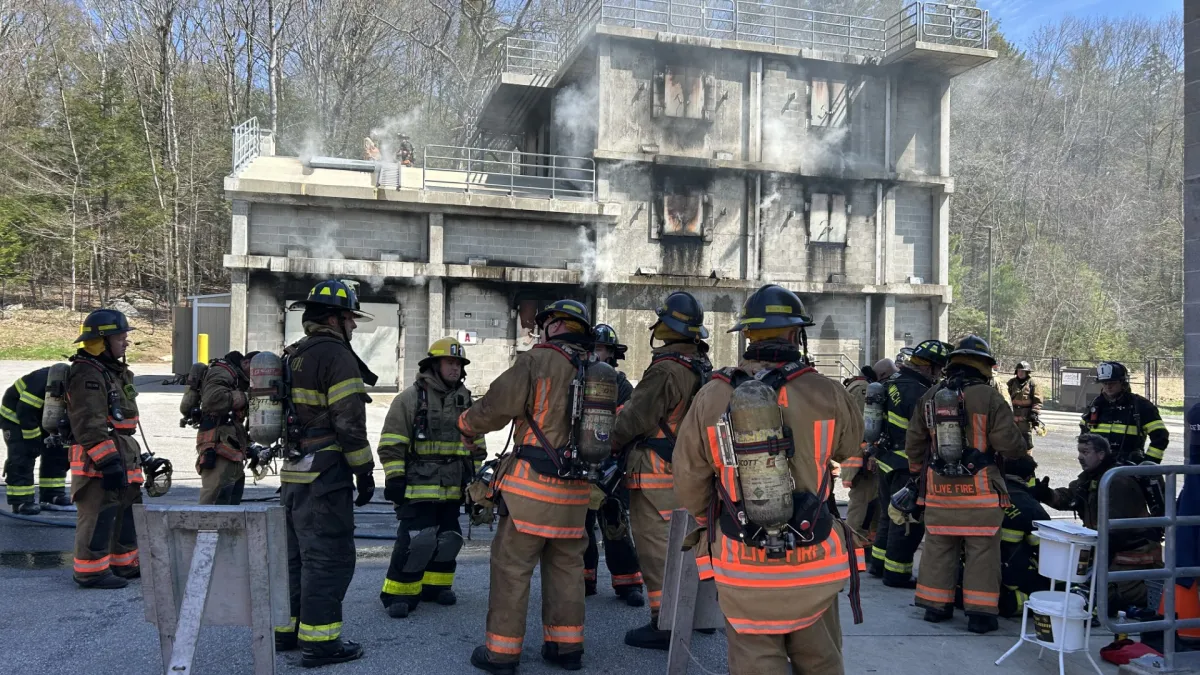
Recruits at the Connecticut Fire Academy are entering one of the most intense phases of their training—working with live fire simulations—just weeks before graduation.
As part of the final stage, trainees spend three days tackling controlled fire scenarios designed to mirror real-life emergencies. Under close supervision, they practice critical skills such as breaching doors, deploying hoses, and actively battling flames.
“It’s challenging at first, but once you focus on your role, it starts to come together,” said recruit Abia Smith, one of 37 members in this year’s class.
After 11 weeks of classroom instruction, the hands-on training allows recruits to apply what they’ve learned in high-pressure environments. The exercises are physically and mentally demanding, but instructors say that’s intentional.
“It’s important they make mistakes here, where it’s safe, so they don’t make them in real emergencies,” said program coordinator Joseph McElroy.
The simulations also highlight the unpredictable nature of firefighting—limited visibility, disorientation and time pressure—forcing recruits to rely heavily on teamwork and communication.
Instructors emphasize that real-world readiness comes from experience, not just theory. During drills, recruits navigate smoke-filled rooms, search for victims and manage their air supply under stress.
“Communication is critical when you can’t see and don’t know what’s happening around you,” one instructor told trainees during a post-simulation briefing.
Many instructors actively participate in the exercises alongside recruits, helping prepare them for frontline conditions.
Despite the intensity, Smith said he’s excited to begin his career and hopes to join the Hamden Fire Department after graduation.
The class is scheduled to complete training and graduate in May.