A North Texas woman who alleged that police mishandled the investigation into her rape endured months of frustration, even after presenting what she considered a critical piece of evidence in her case.
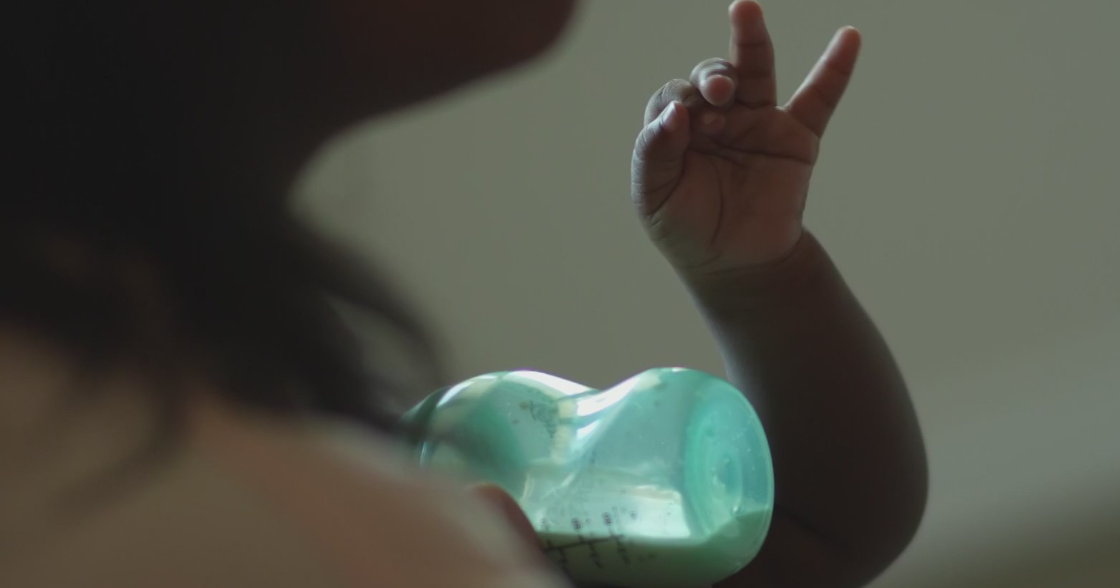
Nine months following the incident, the victim , identified by the I-Team as Ashley , gave birth to a child she maintained was tangible proof of the rape. Upon returning to the Balch Springs Police Department, however, she was informed that she would need to establish that her alleged rapist, identified only as Derek, was the father of the child.
A police report reviewed by the I-Team contained notes added by a sergeant documenting his interaction with Ashley. In those notes, he indicated that he had told her “that a grand jury would almost certainly not indict [Derek] based on what she’s reporting,” and advised her that pursuing a DNA test through paternity court represented the most appropriate course of action.
Ashley’s boyfriend had already undergone DNA testing, the results of which confirmed he was not the child’s father.
Ashley subsequently filed a paternity case with the Texas Attorney General’s Office and attended two virtual court hearings, neither of which Derek appeared at. During the second hearing, the presiding judge acknowledged that he lacked the authority to compel Derek to submit a DNA sample, but stated that he would schedule three separate appointments to afford Derek every reasonable opportunity to participate.
The process, which extended over several months, proved deeply frustrating for Ashley, who maintained that Derek’s persistent refusal to provide a sample was itself an indication of guilt.
“You say you didn’t rape me, go ahead and take a DNA test,” she said. “Go ahead and do what you’re supposed to do.”
**Rape complaints rise in 2026**
Although Ashley lacked legal representation throughout her case, she received support from an advocate at the Dallas Area Rape Crisis Center. Statistics provided by DARCC reflect a notable increase in contacts between 2025 and 2026.
In 2025, the organization’s hotline received 2,568 calls. Within the first nine months of 2026 alone, the hotline had already received 2,346 calls , representing more than 91% of the prior year’s total volume.
DARCC also reported that it accompanied 388 victims to hospital visits for forensic testing during the first nine months of 2026, compared to 386 such visits over the entirety of 2025.
“We’d like to think that it’s because more people are reporting and not because more crimes are happening,” said DARCC CEO Amy Jones. “But because this is one of the most underreported crimes, it is really, really tough statistically to get a sense of how often this is actually happening.”
A 2015 study conducted by the University of Texas found that one-third of adults in Texas had experienced some form of sexual assault, yet fewer than 10% reported the incident to law enforcement. Respondents cited a range of reasons for not contacting police, including fear, embarrassment, and concern that they would not be believed.
**Where Ashley’s case stands**
In September, Ashley was informed that her case had been submitted to the Dallas County District Attorney’s Office in preparation for presentation to a grand jury.
In October, an email from a Balch Springs Police Department sergeant notified Ashley that the District Attorney’s Office had determined there was sufficient evidence to compel a DNA sample. Prosecutors subsequently returned the case to the police department. A sergeant prepared an affidavit, and a judge signed a warrant authorizing the collection of DNA from both Derek and the child. The samples were then sent to a Texas Department of Public Safety laboratory for analysis.
In the hours preceding the initial broadcast of this report, Balch Springs PD contacted Ashley to request the contact information of a witness who had been present on the night of the alleged assault. Nearly 20 months after she first filed her report, Ashley expressed cautious optimism that justice would ultimately be served.
CBS News Texas reached out to Derek, who declined to participate in the I-Team’s reporting.
Balch Springs PD declined to be interviewed or to respond to questions, but issued the following statement:
“We continue to work with the victim and the District Attorney’s Office. The case will be resubmitted to the grand jury with additional evidence. The investigation remains active, and no criminal charges have been filed at this time. The Balch Springs Police Department recognizes the serious and sensitive nature of sexual assault investigations and remains committed to conducting a thorough and impartial investigation while protecting the integrity of the case and the rights and privacy of those involved.”