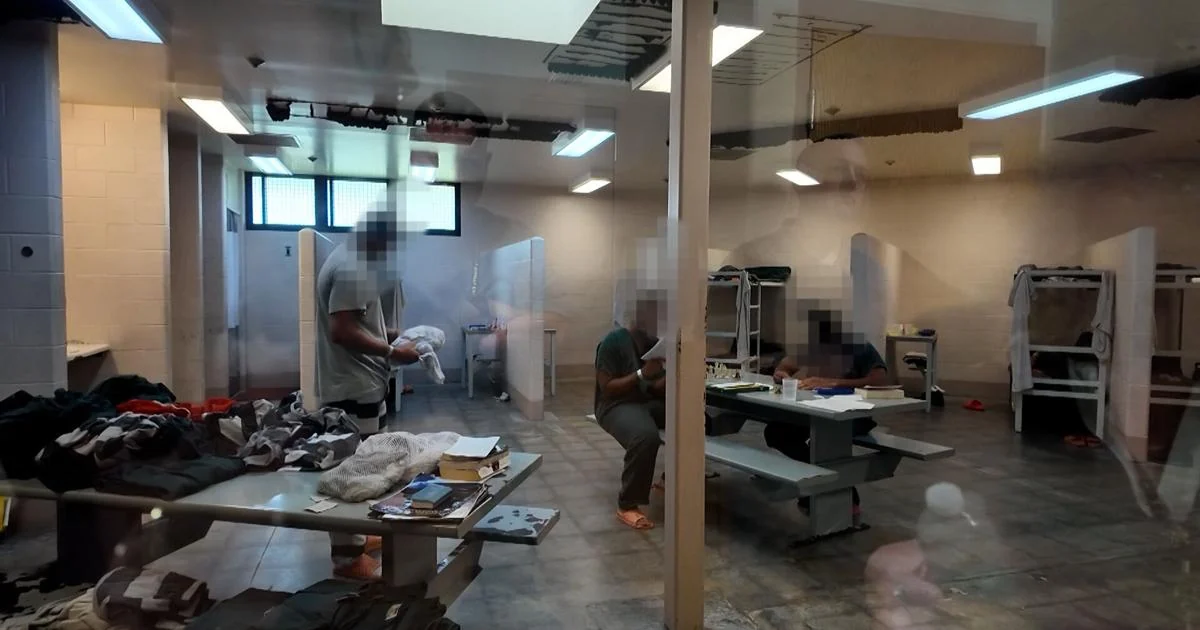
Following the rejection of a proposed sales tax measure by Boone County voters, county officials are now grappling with the financial burden of housing detainees amid a severe overcapacity crisis at the local jail. Boone County Presiding Commissioner Kip Kendrick has noted that out-of-county housing expenses have risen dramatically, climbing from $500,000 in 2022 to nearly $4.5 million this year, with no clear indication that the trend will reverse.
“We don’t know if that’s going to slow or if it’s going to slowly bend a little bit more favorably in the county’s direction,” Kendrick said.
Boone County Sheriff Dwayne Carey has also voiced serious concerns regarding the deteriorating state of the jail facility.
“If this doesn’t pass, we will be in a major, major crisis mode,” Carey stated to KOMU 8 News earlier this year.
Boone County voters rejected Proposition L in the November 3 election. The measure would have imposed a three-eighths of a cent sales tax over a period of 15 years to finance the construction of a new, larger jail facility. The proposition was defeated by a significant margin, with nearly 60% of votes cast in opposition. Had Proposition L been approved, it would have established the foundation for a new 570-bed facility projected to be fully operational by 2030.
Boone County detainees are currently being housed across 14 counties throughout Missouri, a number that Kendrick indicated is likely to increase. Compounding the situation, other counties across the state are similarly experiencing overcapacity conditions, making available jail space increasingly competitive. As a result, Boone County has found itself engaged in bidding wars for placement, further straining its financial resources.
To manage these escalating costs, Kendrick confirmed that the county will be required to implement reductions in other areas of its budget.
“The Boone County government remains in strong financial standing, but in order to remain strong financially, we’ve got to make those decisions,” Kendrick said.
Kendrick did not specify which areas of the budget would be subject to cuts. The budget is due on Sunday and is expected to be finalized in early December.
## Climbing detainee numbers
Kendrick acknowledged that county leadership has limited authority to reduce the number of detainees it is obligated to house, as decisions regarding detention are made by external entities.
“These aren’t decisions that are made by the county,” Kendrick explained. “These are court-ordered , from the state judiciary court , detainments that are coming down on the county, and we’re statutorily required, the sheriff is statutorily required, to provide detainee services.”
Beyond statutory obligations, an anticipated expansion of police presence in Columbia may further contribute to rising detainee numbers. The Columbia Police Department has plans to increase officer staffing levels, supported by a voter-approved public safety sales tax that allocates a portion of its revenue toward hiring additional law enforcement personnel.
“A natural output of hiring up additional officers is more arrests, and more arrests leads to more bookings, and more bookings leads to more court-ordered detainments that are placed on the county,” Kendrick said. “That responsibility then comes back to us.”
Kendrick emphasized that all potential solutions remain under consideration, including the possibility of housing detainees in facilities located outside of Missouri.
“This has to be a broad discussion, both with the partners who are impacting certainly the system, but then also with the community at large,” he said.
In the lead-up to the November 3 election, organizers opposed to the construction of a new jail actively campaigned against Proposition L. While some among them acknowledged the reality of overcapacity, they challenged the proposed solution as the appropriate course of action.
“There are too many people, but there are ways that the punishment system could figure out how to have less people in the jail,” said John Amick, an organizer with No New Jail, earlier this year. “Unfortunately, it doesn’t seem like a priority.”
The No New Jail coalition proposed that funding intended for a new jail facility be redirected toward mental health services and criminal justice reform initiatives instead.
“Do we need jail expansion if there are community services that could step up and help people stay out of jail, get to court, get treatment without having to be in jail to do that?” asked No New Jail volunteer Peggy Placier earlier this year.
According to Sheriff Carey, the proposed jail would have included a dedicated mental health housing unit, which he argued would have addressed a significant gap in care for detainees with mental health needs.
“Oftentimes, when we get them regulated and they get released, they don’t have services to go to,” Carey said prior to the election. “We’re hoping that we can reduce that a little bit by actually doing that at a local level, because the state money and the federal money is not going to come.”