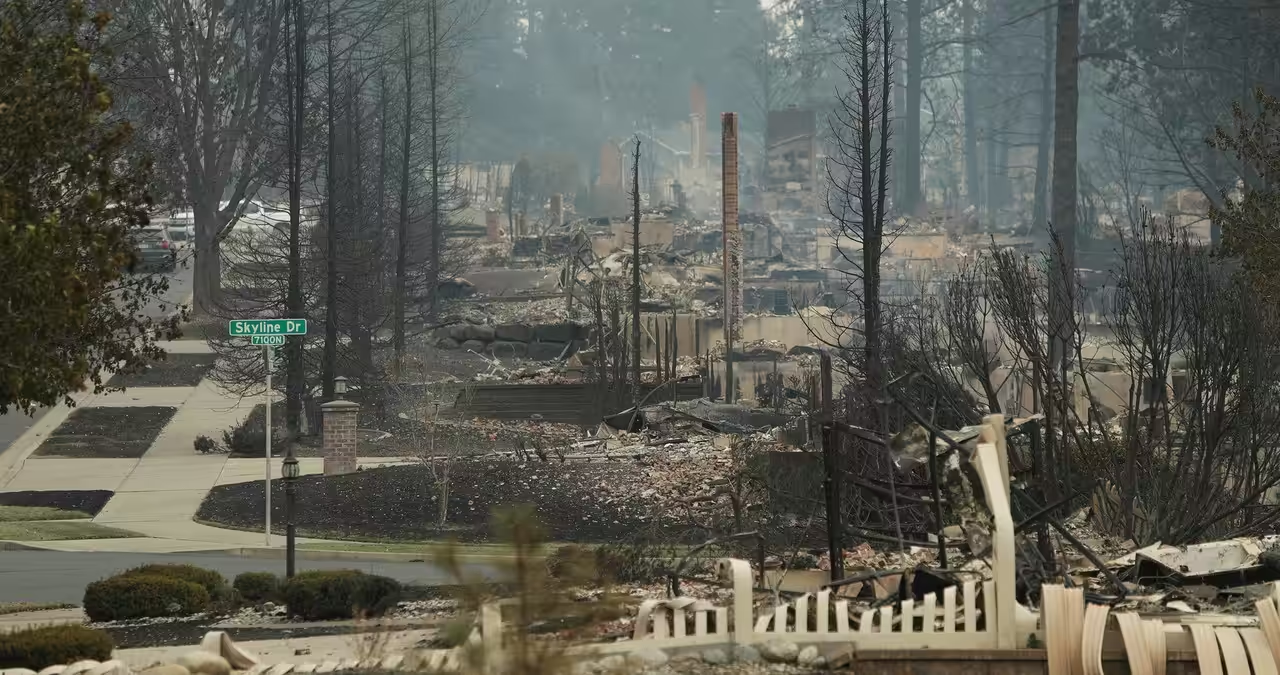
SPOKANE, Wash. , Residents returned to scorched neighborhoods across eastern Washington this week to find their homes reduced to ash and twisted metal by wildfires that swept through the drought-stricken region over the weekend. In some areas, only chimneys remained where houses once stood.
About 700 buildings had been destroyed by Monday in the fires around Spokane, the state’s second-largest city, and officials warned the count would likely rise. Roughly 67,000 people remained under evacuation orders. Investigators had not determined a cause.
The state’s entire congressional delegation sent a letter to President Donald Trump on Monday asking for an expedited emergency declaration, citing the scale of destruction.
“Hundreds of people have completely lost their homes and farms, and many are prohibited from returning to their homes or neighborhoods as crews continue to extinguish smoldering embers,” the lawmakers wrote.
The fires had burned about 12.5 square miles (32 square kilometers) by Monday, jumping roads and rivers as smoke filled the sky. Cooler temperatures and calmer winds arrived to help crews, but forecasters expected hot and dry conditions to return by midweek.
In one Spokane neighborhood, blackened vehicles, a boat warped by heat and melted plastic recycling bins sat amid the ruins. Across the street, lawns remained green and houses were untouched. Residents sprayed water from hoses and sprinklers onto their properties.
Miriam and Daniel Sim, both 76, returned to the home they had shared since 2005. Miriam covered her mouth as she looked at what was left.
“It’s like a war zone,” Miriam said. “There’s nothing to save.”
“At our age, do we want to rebuild?” her husband asked.
No deaths or major injuries have been reported so far.
Cpl. Mark Gregory, a spokesperson for the Spokane County Sheriff’s Office, said the county initially received nearly 300 reports of missing people. By Monday, all but 14 had been cleared, Gregory said.
Those outstanding cases more likely reflected people who had been out of contact since evacuating rather than people who were truly missing or in danger, authorities said.
The Spokane-area wildfires remained completely uncontained, said Courtney James, a spokesperson for the Washington State Department of Natural Resources.
The blazes were among dozens burning across the Western U.S., straining federal, state and local firefighting resources. At least 390 square miles (1,000 square kilometers) have burned across Washington, where severe drought and a meager snowpack have worsened conditions.
Officials asked the public not to fly drones near the burned areas, warning that aircraft operations could be forced to halt.
Homes, cars, possessions lost in flames
Angela and Wayde Deatherage, both 49, evacuated shortly after 3 p.m. Saturday with their son, grabbing bins of family photos and heirloom rings but little else. About 30 minutes later, fire alerts began pinging Angela’s phone from their home security camera.
Wayde Deatherage took back roads and returned by early evening. He stopped at the end of the street and called his wife: “Our house is done.”
Deatherage did not stop there. He propped a hose at a neighboring house and aimed the spray at the property. That home survived.
The couple returned to their lot Sunday.
“It’s just ash,” Angela Deatherage said of the home where they had lived for nearly 22 years. “It’s like our house sunk down in the basement. … There’s just so much loss for so many people.”
Friends and relatives posted online appeals for money, clothing and basic necessities on behalf of fire victims. Kory and MacKensie Aspaas were away with their children when the fire hit.
“They are coming back from being out of town to a life that’s been completely wiped out,” friend Kali Butler said.
Officials said Sunday that evacuees in Spokane included patients from the city’s U.S. Veterans Affairs hospital. Investigators had yet to determine how the blazes started.
Grassland burns in Idaho, Oregon and Utah
Spokane was not the only community struggling to contain fires.
A lightning-caused blaze that has burned more than 530 square miles (about 1,370 square kilometers) of grassland across western Idaho and eastern Oregon continued to grow Monday. The fire threatened more than 600 homes and 800 other structures in an area home to cattle ranches, authorities said.
In central Utah, a fire quadrupled in size over the weekend, reaching nearly 109 square miles (282 square kilometers) by Monday afternoon. More than 100 cattle died in the blaze, according to law enforcement.
Heavy winds pushed flames across containment lines, though forward progress slowed toward Fillmore, a town of about 2,600 people and the seat of Millard County, officials said. Mandatory evacuations were ordered Sunday evening for the town’s southern portion, and inmates at the county jail were transferred.
Spokane sets up shelter for impacted residents
About 400 evacuees were staying at Spokane’s main convention center, which had been converted into a shelter, officials said.
Spokane Public Schools opened a free emergency drop-in camp for children Monday. Trials at the county court were pushed to Aug. 10.
Several larger fires continued burning in less populated areas northwest of Spokane.
Johnson reported from Seattle. Associated Press writers John Hanna in Topeka, Kansas; Kathy McCormack in Concord, N.H.; Martha Bellisle in Seattle; and Ed White in Detroit contributed.