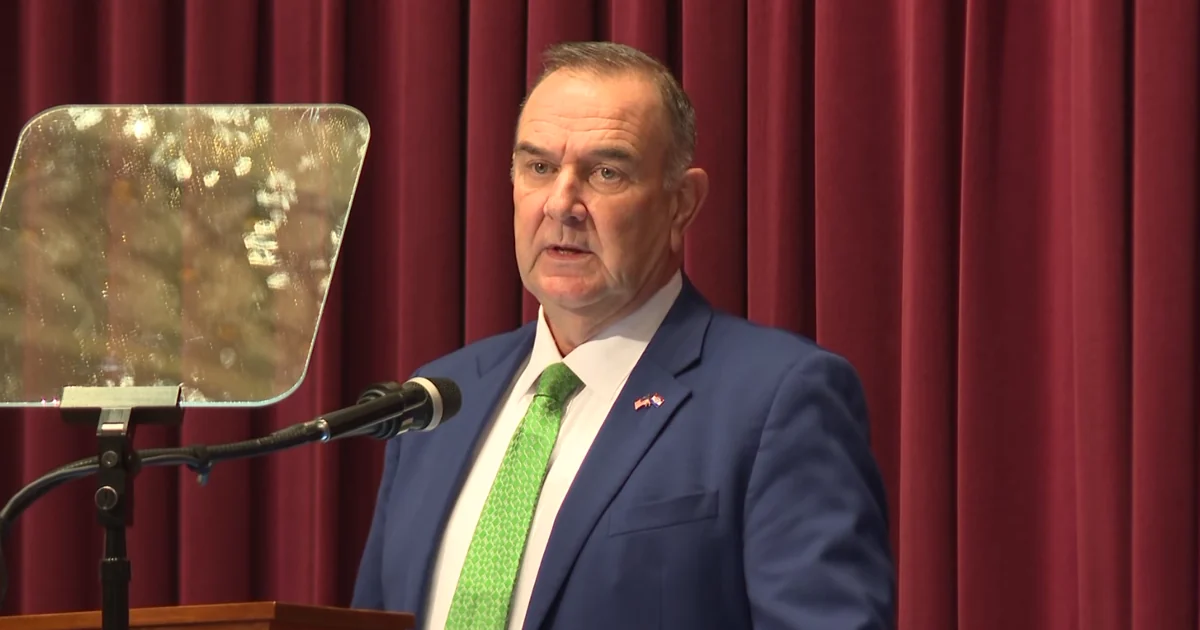
Governor Mike Kehoe has announced that Missouri is fully prepared to address any potential fallout resulting from the United States Army’s plan to detonate unstable explosive materials located in Middletown, Iowa.
The Army intends to detonate approximately five tons of lead azide, a process that would release lead-containing particles into the surrounding atmosphere. Given that lead is a toxic substance harmful to both humans and animals, the proximity of Missouri’s border , situated just 57 miles from the detonation site at the Iowa Army Ammunition Plant , has prompted significant concern among state officials.
In an official statement issued on Friday, Governor Kehoe confirmed that he had activated a multi-state agency coordination system and implemented a comprehensive monitoring plan covering air quality, water safety, agriculture, and public health in anticipation of the detonation. The state agencies placed on alert include the Department of Natural Resources, the Department of Health and Senior Services, the Department of Agriculture, the Department of Mental Health’s Office of Disaster Services, and the State Emergency Management Agency.
Although the detonation was originally scheduled for Friday, the Army postponed it to Monday in response to mounting public safety concerns and opposition from elected officials. Later that same Friday, a federal judge issued an order directing the Army to delay the detonation indefinitely, following a lawsuit filed by environmental activists.
“In preparation for the planned detonation in our neighboring state, my office and our state agency leaders are in communication with environmental and health officials in Iowa, along with federal officials, to ensure we have a response plan, if necessary,” Governor Kehoe stated in the Friday news release.
“While we understand the Army’s need to address these volatile materials, we want to ensure that Missourians have the facts on potential impacts and the work underway by state agencies to prepare.”
The advanced degradation of the lead azide renders the materials extraordinarily dangerous to transport, as any attempt to move them could trigger an accidental and potentially fatal detonation. The Army’s initial decision to reschedule the detonation to Monday was also driven by concerns that dropping temperatures beyond that date could further elevate the risk of an unintended explosion.
The precise consequences of a detonation in Iowa remain uncertain. According to the Army, loud noise and ground vibrations resulting from the blast may cause localized window damage in the surrounding area. While the exact volume of lead to be dispersed into the atmosphere has not been definitively established, reporting from CNN indicates that the majority of sizeable particles are expected to settle within 20 miles of the detonation site.
The federal judge’s order does not specify when the court will take further action on the matter. However, according to CNN reporting, the Environmental Protection Agency indicated in a court filing that it intends to submit a response by Sunday.
Despite the judicial halt, officials in both Illinois and Missouri have continued their preparations for potential impacts within their respective states.
Kehoe activates state agencies to monitor Missouri
Governor Kehoe confirmed that he has mobilized five state agencies and departments to prepare for potential environmental consequences whenever the detonation ultimately takes place.
The Missouri Department of Natural Resources is actively collaborating with state and federal partners to evaluate any post-detonation environmental impacts and to position itself to respond appropriately. The department is also prepared to collect samples from the Mississippi River and other surface water drinking sources, providing assistance wherever necessary.
The Missouri Department of Health and Senior Services Lead Program will closely monitor any potential health risks posed to Missouri residents. Governor Kehoe noted that the department will consult with federal health partners throughout the process. While the risk to individuals outside the immediate detonation area is considered minimal, the Department of Health and Senior Services advises those concerned about potential exposure to remain indoors as much as possible following the detonation.
The Missouri Department of Agriculture will collaborate with industry stakeholders to support producers who may be affected and to ensure that Missouri’s food supply remains safe for consumers. The department further advises livestock producers to work closely with their veterinarians to monitor any animals that may have been exposed.
The Missouri Department of Mental Health’s Office of Disaster Services is coordinating with partner agencies to provide support to Missourians as the situation continues to develop. The Disaster Distress Helpline is available around the clock at 1-800-985-5990, and residents may also call, text, or chat via Missouri 988.
The Missouri State Emergency Management Agency will oversee coordination efforts both across state lines and within regional emergency management agencies throughout Missouri. The agency has committed to sharing information regarding potentially affected areas as it becomes available.