
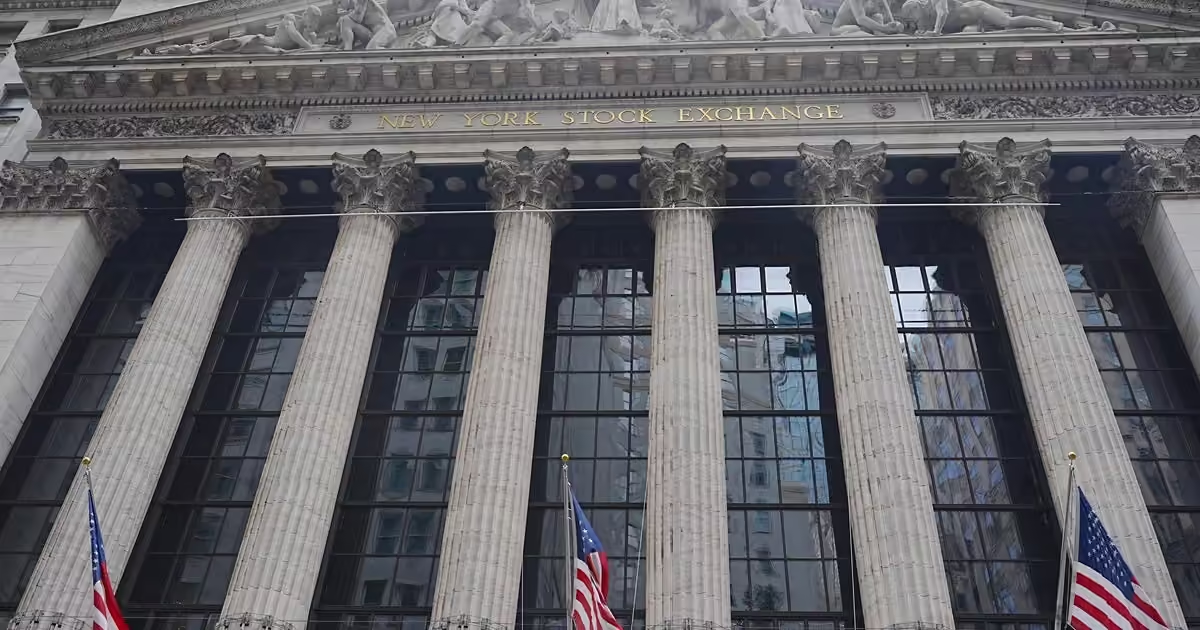
The Dow Jones Industrial Average experienced a dramatic decline of more than 1,100 points on Thursday, as stock markets broadly retreated amid mounting concerns that the artificial intelligence sector’s remarkable growth may be losing momentum.
The Dow fell 1,101 points, or 2.2%, closing at 49,097, while the S&P 500 declined by 2% and the technology-focused Nasdaq Composite Index dropped 2.3%.
The market downturn was widespread, with more than 90% of S&P 500 stocks recording losses.
Wall Street analysts indicated that no single event triggered the sell-off, instead attributing it to persistent concerns surrounding the long-term sustainability of financial markets that are heavily dependent on the projected growth of artificial intelligence. Despite this broader pessimism, Anthropic made a notable market debut, with its shares climbing as much as 34% during Thursday’s session following what stood as the largest initial public offering in history.
“The slump has set off a scramble of headline searching as people scour the wires to find the most negative sounding news flash,” said Adam Crisafulli, an analyst at Vital Knowledge, in a research note. “People just don’t have much enthusiasm for this market, and rallies tend to bring out sellers instead of chasers (there is still a lot of hesitation when it comes to being long AI-linked names, especially picks-and-shovels, and the defensive stuff is quite extended after the recent rally).”
For several weeks, investors have expressed growing unease regarding the financial health of the AI sector, with particular concern that the massive influx of capital flowing into data center infrastructure may fail to generate the levels of productivity and profit growth that companies are anticipating.
Adding to investor anxiety, markets were further unsettled earlier this month by the resignation of Nvidia CEO Jensen Huang, following the disclosure of his involvement with a woman suspected of having ties to Chinese intelligence. Several lawmakers have since intensified their scrutiny of Nvidia’s business dealings with China and companies operating in southeastern China, while the Commerce Department signaled this week its intention to impose stricter export controls on AI-related chips.
On Thursday, shares of AI-linked companies reversed course, shifting from morning gains to afternoon losses. Micron Technology, which has seen a significant surge in memory chip sales driven by AI demand, initially climbed 7.8% before reversing to close with a 1.8% loss. CoreWeave, a company specializing in purchasing AI chips and leasing cloud-based access to clients, swung from a morning gain of 10.5% to a decline of 5.5%.
Nvidia similarly erased an early gain of 4.7%, ultimately closing down 2.7%. The chipmaker, widely regarded as a symbol of the AI boom, has seen its stock weighed down by the same industry-wide concerns that have troubled the broader sector.
The losses were not confined to technology stocks alone. Williams-Sonoma fell 15.3% after the parent company of Pottery Barn and West Elm reported quarterly revenue that came in marginally below Wall Street’s expectations.
Walmart also declined 1.2%, despite the retail giant reporting quarterly earnings and revenue that slightly surpassed analyst forecasts.