A museum rich in historical significance has become the driving force behind the redesign of East Miller Park.
The Jefferson City Fire Museum has been an integral part of the community since 2014; however, its history extends far beyond that point.
The history of the Jefferson City Fire Department itself predates the department’s very establishment.
“So the first Capitol caught fire, and there was no volunteers, there was nothing, so it burned down,” said Anthony Trapani, Jefferson City Fire Museum’s board president. “And then after that, the city organized a bucket brigade, so volunteers.”
That occurred in 1837. When the Capitol caught fire once again in 1911, the city was confronted with a significant dilemma.
“The state came to the city and said, we’re going to move the capital if you guys can’t provide fire protection,” Trapani said.
In 1912, the city established its first full-time professional fire department. One hundred and two years later, the Jefferson City Fire Museum was formally established.
“In 2014, the city actually established through proclamation a fire museum as an entity,” Trapani said. “We were actually able to establish a fire museum board and run it.”
Trapani noted that before the museum could open its doors, it required restoration to its original character.
“I joke that the ’70s moved in, all the shag rug and carpet that was here, and then part of (the fire department) assuming the building was some of that demo work,” he said. “We had to get rid of the ’70s and we had to bring in, we had to bring back the early ’30s and ’40s.”
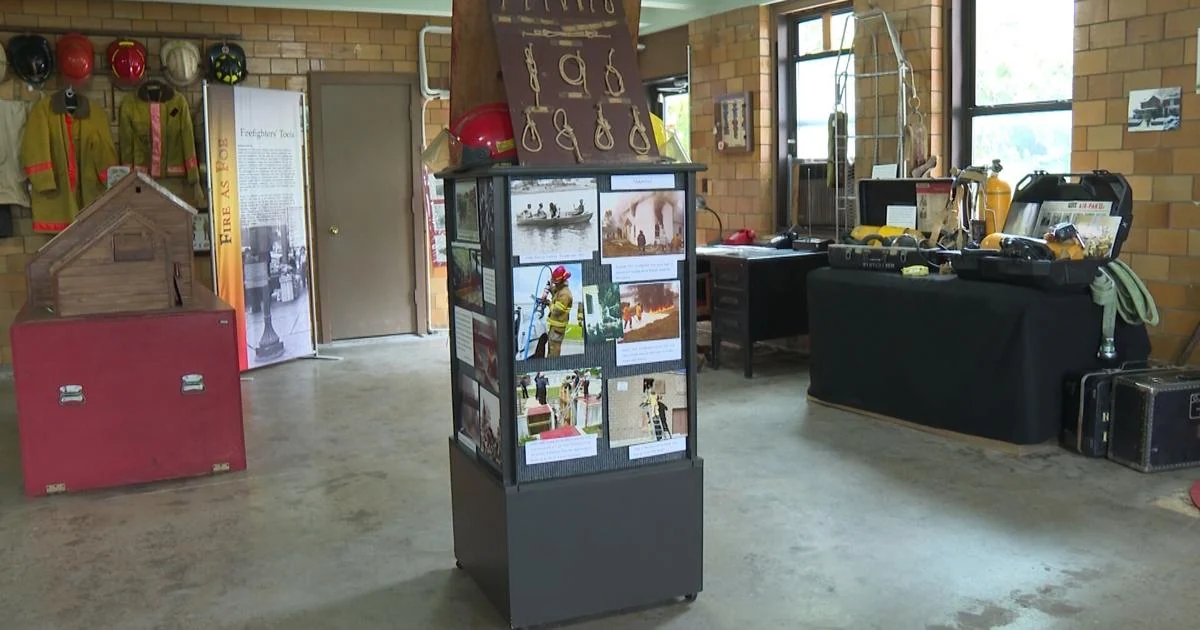
The team successfully restored the aesthetic of the 1930s and 1940s while simultaneously highlighting advancements in technology over the decades.
“We have some static displays, showcasing some of the technology that’s changed over the years,” he said.
The museum does not solely focus on the past; it also celebrates the present.
“You look at the pictures around this station, you will see faces of guys and gals that are working today,” Trapani said.
The museum presents a broad range of the department’s history, featuring vintage fire trucks, bunker gear, and even leather hoses.
“That leather had to be hand-kept for all those years, and apparently it’s very rare, what I’ve been told, to have any leather fire hose at all,” Trapani said.
In the near future, East Miller Park, situated directly across the street from the museum, will also reflect elements of the museum through its newly planned fire truck theme.
“We’ll have the fire truck and then everything climbable will be red and black and have some fire themes in little games they can play and signage across the park, too,” said Ashley Wiskirchen, the community relations manager for JC Parks.
The upgrades extend beyond playground equipment, as safety enhancements are also being implemented to complement the theme. The park will feature new red and black pour-in-place rubber surfacing, designed to ensure safety for children as well as individuals who require additional accessibility support.
Trapani believes the new theme will serve as a meaningful connection between the two spaces.
“If you’re climbing on a fire truck over there in the park, and you see this museum over here, an old fire station, that’s got to be cool, right?” Trapani said.
Construction on the park is scheduled to commence this winter, with completion anticipated by the following fall.
“Sometimes things run a little earlier, sometimes a little later, but we’re really hoping kids are out here playing this time next year,” Wiskirchen said.
Those wishing to visit the fire museum are required to schedule an appointment in advance. As the museum is currently operated entirely by volunteers, prior notice is necessary before arriving. Individuals interested in arranging a visit to explore the museum’s extensive collection of historical artifacts may do so by emailing [email protected].