A Missouri judge has approved a landmark settlement requiring agrochemical company Bayer to pay up to $7.25 billion over two decades to resolve thousands of claims from U.S. cancer patients. The plaintiffs alleged that the company failed to adequately warn consumers that its widely used weed killer, Roundup, could cause lymphoma.
The nationwide settlement covers both current Roundup users who are already ill and those who may be diagnosed with non-Hodgkin lymphoma in the future. Eligible participants could receive an average payout ranging from $10,000 to $165,000, with the specific amount determined by factors such as the nature and duration of product use, the age of the claimant at the time of diagnosis, and the severity of their illness.
For Germany-based Bayer, which continues to deny that Roundup causes cancer, the settlement offers a degree of financial certainty amid escalating litigation costs that had led the company to consider withdrawing the product from U.S. agricultural markets. Bayer has already reformulated its residential version of Roundup.
The plaintiffs, too, faced considerable uncertainty. While the settlement was pending, the U.S. Supreme Court significantly weakened one of the central legal arguments in the Roundup lawsuits. In June, the Court ruled that Bayer could not be sued in state courts for failing to warn consumers about cancer risks, given that federal regulations do not mandate a cancer warning label and states are prohibited from imposing additional labeling requirements.
Although some attorneys representing cancer patients contend that the settlement payouts are insufficient, others argue that the agreement is preferable to receiving nothing , a prospect that became increasingly likely following the Supreme Court’s ruling.
In his written judgment granting approval, St. Louis Circuit Judge Timothy Boyer described the average individual payouts as “fair and adequate” and noted that the total dollar amount is “among the largest in the history of mass tort personal-injury class action settlements.” The approved settlement also includes $600 million in attorneys’ fees.
Judge Boyer further noted that had the settlement been rejected, there was a genuine risk that Bayer might have sought bankruptcy protection.
Bayer CEO Bill Anderson stated in a formal announcement that the court-approved settlement represents “a decisive milestone in the company’s strategy to mitigate the risks of both pending and future Roundup litigation.”
The decision remains subject to appeal.
Roundup has been used on weeds for over 50 years
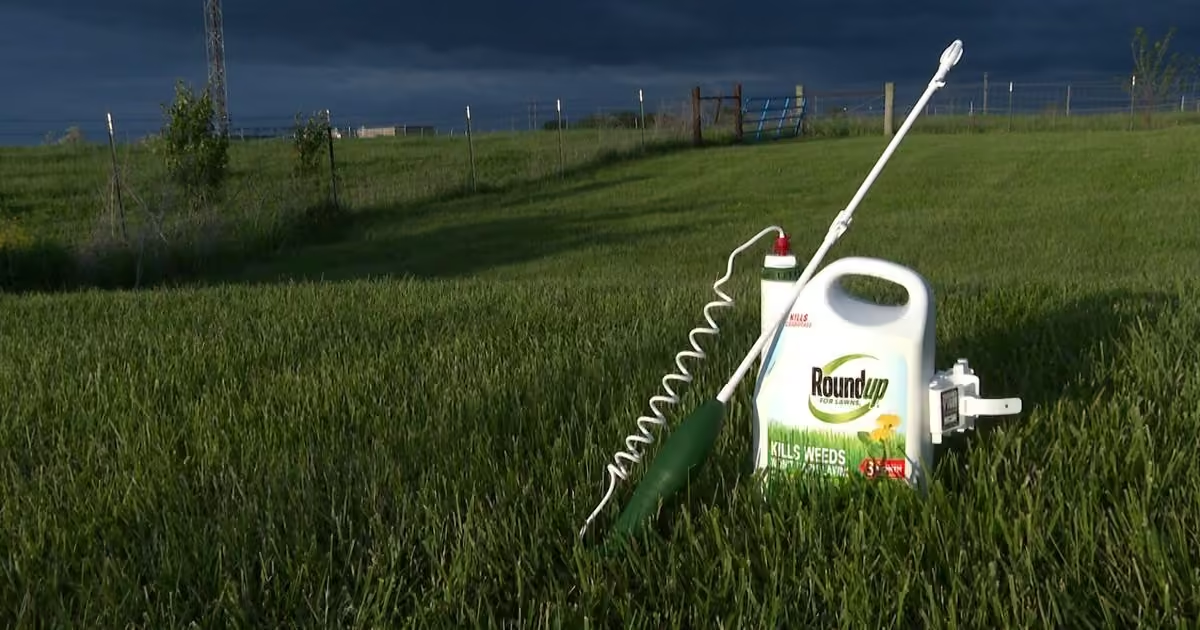
Missouri-based Monsanto introduced Roundup weed killer in 1974, with glyphosate as its active chemical ingredient. The product rapidly became one of the most extensively used herbicides in agriculture. Roundup is designed for use alongside genetically modified seeds engineered to resist its herbicidal effects, enabling farmers to increase crop yields while reducing soil disruption through less frequent tilling.
The product is also commonly applied in residential lawns and gardens.
Bayer incorporated Roundup into its portfolio following its acquisition of Monsanto in 2018, along with a growing body of litigation alleging that glyphosate causes non-Hodgkin lymphoma. The matter remains scientifically disputed. In 2015, the World Health Organization’s International Agency for Research on Cancer classified glyphosate as “probably carcinogenic,” while the U.S. Environmental Protection Agency has concluded that it is not likely to cause cancer in humans when used as directed.
Approximately 200,000 Roundup-related claims have been filed against Bayer, many originating from individuals who used the product on residential lawns and gardens. In response, Bayer has removed glyphosate from new versions of Roundup intended for residential markets.
The litigation has yielded mixed outcomes. Only a few dozen cases have proceeded to jury trials, with verdicts divided between Bayer and the plaintiffs. In one notable case, a Georgia jury awarded plaintiffs $2.1 billion in damages.
In the first Roundup verdict following the Supreme Court’s precedent-setting ruling, a Missouri jury in October ruled in favor of Bayer in a case involving allegations of design defects, negligence, and fraud. According to Bill Dodero, Bayer’s U.S. General Counsel and Global Litigation Leader, the verdict “should send a strong signal” that plaintiffs “will face significant challenges” in pursuing Roundup-related cancer claims going forward.
Attorneys disagree on whether the settlement is fair
Bayer had previously set aside $16 billion to cover legal costs associated with Roundup litigation. The new settlement, which is separate from that allocation, is intended to address the majority of remaining lawsuits, as well as any future claims brought by individuals who were exposed to Roundup prior to the settlement’s proposal in February.
“Today’s final approval order delivers guaranteed compensation to Roundup cancer victims who have waited more than a decade for justice,” said Christopher A. Seeger, court-appointed counsel for cancer patients in the case.
Under the terms of the settlement, Bayer will make annual payments into a dedicated fund for up to 21 years, with total contributions reaching as much as $7.25 billion. Individual payouts will vary based on specific circumstances. Agricultural, industrial, or turf workers with prolonged exposure to Roundup who were diagnosed with an aggressive form of the illness before the age of 60 could receive an average of $165,000. However, individuals diagnosed at age 78 or older would receive significantly less, with an average payout of $10,000.
Several attorneys have expressed concern that the individual settlement amounts are too modest and that the terms are overly restrictive.
“This settlement is the scariest, worst future settlement that’s ever been contemplated,” attorney Gerson Smoger stated during a September court hearing examining the fairness of the settlement. He argued that it bound future claimants for decades without the possibility of punitive damages, while “kept the product that they were exposed to on the market, allowing the victims to continue to be exposed.”
The settlement was filed in St. Louis Circuit Court in Missouri, the home state of Bayer’s North American crop science division and the jurisdiction in which a significant number of the related lawsuits have been brought.