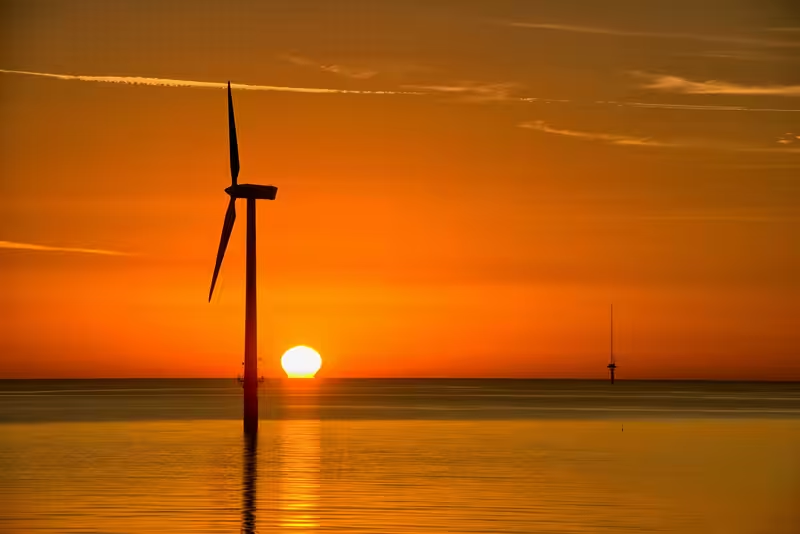
A recent court ruling in Delaware has provided a significant boost to a proposed offshore wind project near the Maryland coastline, marking a key development in a long-running dispute over renewable energy expansion in the mid-Atlantic region.
The decision upheld a state law that prevents Sussex County from blocking permits tied to the project’s infrastructure. This ruling clears a major obstacle for U.S. Wind Inc., the company planning to build a large-scale wind farm off the coast of Ocean City.
Project Moves Forward, But Uncertainty Remains
While the ruling represents progress, the future of the wind farm is still uncertain. The proposed project includes 114 – offshore turbine capable of generating up to 1,800 megawatts of electricity—enough to power roughly 600,000 homes.
However, the development continues to face multiple hurdles, including:
- A federal lawsuit filed by Ocean City officials
- Regulatory challenges to permits issued in Delaware
- Potential risks to federal tax incentives tied to project timelines
The substation, planned near the Indian River Power Plant in Dagsboro, will play a critical role in connecting offshore-generated electricity to the regional power grid.
Political and Legal Tensions Continue
The legal battle stems from a lawsuit filed by Sussex County and the town of Fenwick Island, which challenged a state law designed to override local authority on the project.
Delaware officials welcomed the court’s decision, emphasizing that energy policy should be determined at the state level rather than by individual municipalities. Meanwhile, local leaders are reviewing the ruling and considering whether to appeal to the Delaware Supreme Court.
Broader Debate Over Energy Policy
The dispute highlights ongoing tensions between state governments pushing for renewable energy expansion and local communities concerned about environmental and economic impacts.
The legislation at the center of the case—Senate Bill 159—was passed after intense political negotiations in 2025. Supporters argued the wind project is essential for long-term energy stability, while critics raised concerns about local control and government overreach.
What’s Next?
Despite the legal win, U.S. Wind Inc. must still navigate legal appeals, regulatory approvals, and shifting federal policies before construction can begin.
With rising electricity demand across the region, the project remains a key piece in the broader conversation about clean energy and infrastructure in the United States.