
TAMPA, Fla. — A new lawsuit is challenging Florida’s rules on altered or obscured license plates, arguing that the law is so unclear it is being enforced inconsistently across the state.
The lawsuit, filed by traffic ticket defense service Ticket Toro, focuses on Florida Statute 320.061, which bars drivers from “altering” or “mutilating” a license plate. Critics argue the statute fails to clearly define what counts as an alteration, leaving both drivers and law enforcement to interpret the rule in different ways.
Florida lawmakers tightened license plate rules last year through legislation that raised penalties for covering, obscuring or altering a tag. The law prohibits anything that blocks or makes it difficult to read a plate, including tinted license plate covers, decorative frames that cover letters or numbers and anything that obstructs the registration decal.
The law took effect in October, and violations can bring serious penalties. Drivers could face fines of up to $500, as well as up to 60 days in jail and a mandatory court appearance because the offense is classified as a second-degree misdemeanor.
The lawsuit claims the statute is unconstitutionally vague, arguing that it does not clearly explain what behavior is illegal. It states the law violates the Due Process Clause of the Fourteenth Amendment, which requires criminal statutes to define prohibited conduct clearly enough for ordinary people to understand what is not allowed.
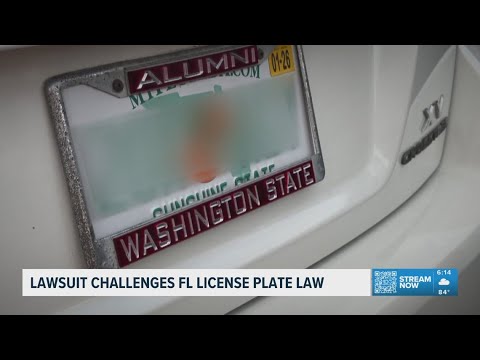
According to the complaint, the lack of clarity has led to inconsistent enforcement across Florida.
Traffic attorney Doug Burnetti said he has seen cases where drivers were cited for minor obstructions, while others with similar plates were not ticketed.
“If the agencies aren’t even applying it consistently, that kind of demonstrates the vagueness of it,” he said.
Burnetti said the inconsistency is particularly troubling given how serious the penalties can be.
“When you look at the potential seriousness of the penalty, it should be pretty clear,” he said.
Some drivers have reportedly received citations for license plate frames that cover small parts of the lettering — such as a portion of the “Sunshine State” slogan or even a single letter on the plate. Ticket Toro reported that 422 criminal citations were issued in Miami-Dade County within four months after the law took effect.
State officials, however, say the rule is clear.
Law enforcement officials say the law is intended to ensure license plates remain clearly visible for identification and public safety. Florida Highway Patrol Trooper Ken Watson said officers simply check whether the key information on a tag is readable — and if those key elements are visible, drivers should generally be in compliance.
“If you can see all of the letters and the numbers and the state, that is fine,” he said. Watson said obscured plates can create concerns during traffic stops because officers rely on license plates to identify vehicles. “We want to make sure that we can view that tag,” he said. “If we cannot, we are going to feel that that person is up to no good.”
In December, the Florida Department of Highway Safety and Motor Vehicles released a memo clarifying that license plate frames are not automatically illegal. According to the memo, frames are permitted as long as they do not block the alphanumeric plate identifier or the registration decal in the top-right corner.
However, the lawsuit argues that guidance from an agency memo has not resolved what plaintiffs describe as a vague statute and inconsistent enforcement. The federal complaint seeks a statewide injunction that would block enforcement of the law. It also asks the court to expunge citations that have already been issued under the statute.