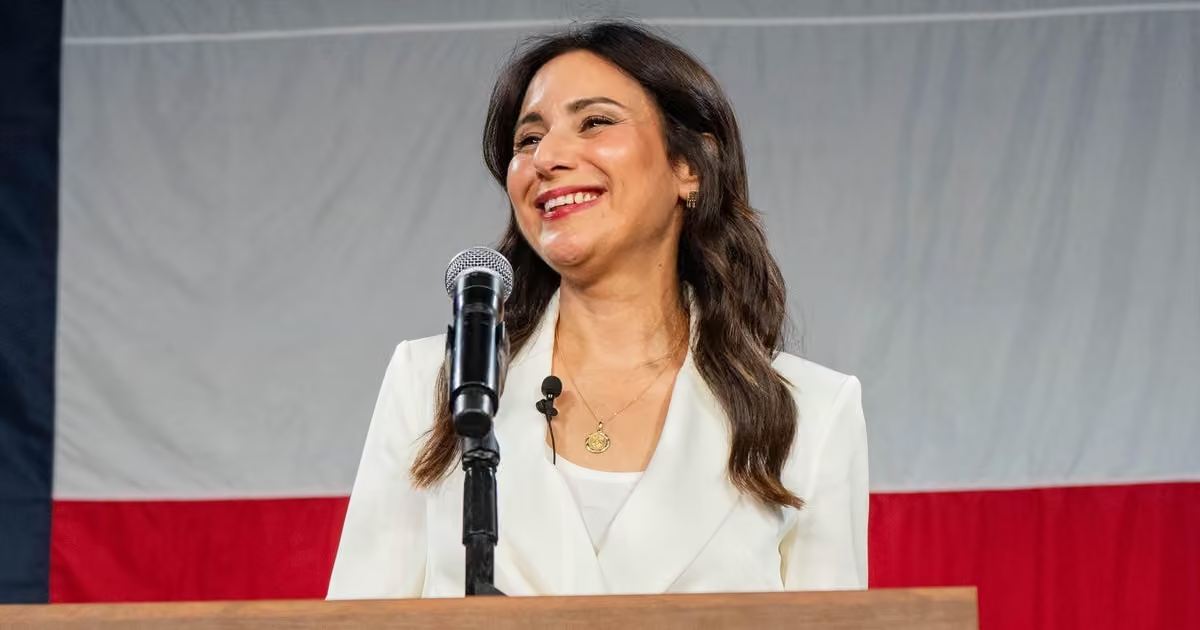
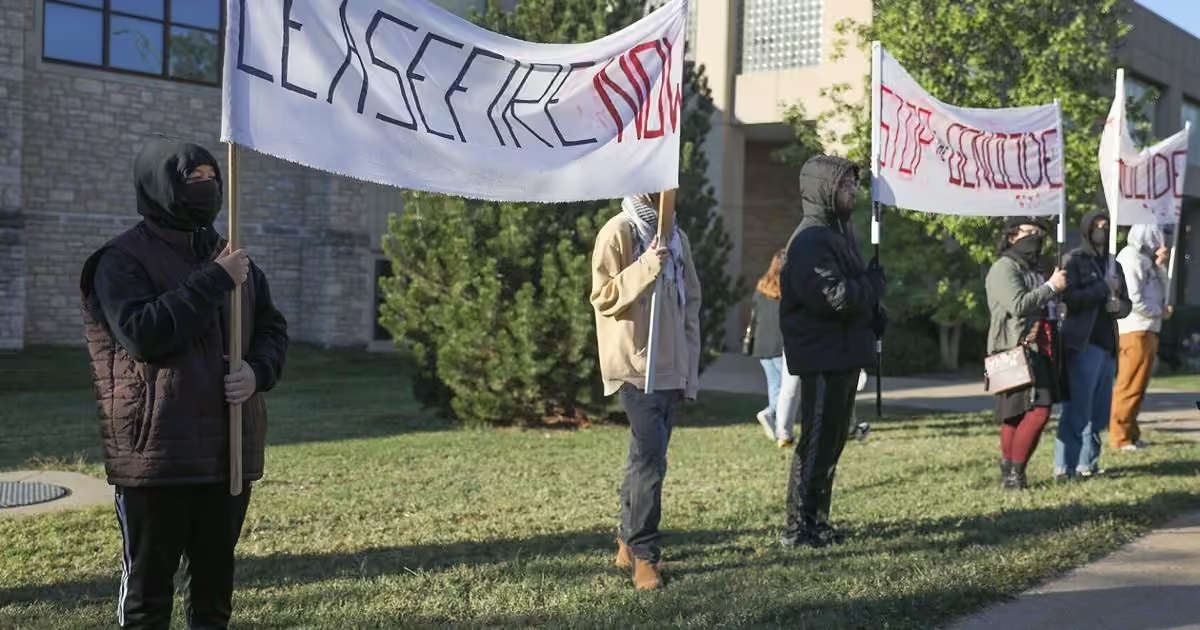
Mizzou Students for Justice in Palestine has filed a federal lawsuit against Missouri Attorney General Catherine Hanaway, alleging that her investigation into the student organization constitutes a violation of its First Amendment rights.
The Council on American-Islamic Relations, which serves as legal representative for the group, formally announced the lawsuit during a news conference held in Columbia.
Legal counsel contends that the investigation represents an act of retaliation against the group for its pro-Palestinian advocacy and its previously filed lawsuit against the University of Missouri.
Hanaway announced the investigation on September 23, citing concerns regarding the organization’s fundraising activities and potential connections between donations and groups alleged to have ties to terrorism.
Her office subsequently issued civil investigative demands to both Mizzou Students for Justice in Palestine and the national organization, seeking to determine whether either entity violated the Missouri Merchandising Practices Act.
Attorneys representing Mizzou Students for Justice in Palestine clarified that their group maintains no affiliation with the national Students for Justice in Palestine organization. In a statement issued September 23, Hanaway asserted that “public reports from independent organizations have raised concerns about SJP’s fundraising representations and alleged links between its efforts and organizations whose resources may ultimately reach radical Islamist terrorist groups.”
She further stated that these “concerns have prompted closer scrutiny of how the organization solicits and uses donations from Missourians,” and on that basis, her office demanded information pertaining to both groups’ membership, donors, and fundraising activities dating back to 2021.
Attorneys for the student organization argue that the demands are excessively broad and intrusive, and that compliance could deter students from freely exercising their constitutionally protected rights.
Arianna Khan, a staff attorney with CAIR, characterized the investigation as entirely without merit and accused the state of attempting to suppress the students’ protected speech.
John M. Fossum, a fellow CAIR staff attorney, noted that the students have encountered repeated obstacles as a direct result of expressing their political views on campus.
“They came to Mizzou to speak, to engage in free speech and debate, and at every turn public officials have tried to silence them, harass them and suppress their speech,” Fossum said.
Sahar Bhutto, president of Mizzou Students for Justice in Palestine, stated that the group believes it is subjected to an inequitable double standard in comparison to other identity-based organizations on campus.
“When we are just doing hopeful messaging, chalking in Speakers Circle, that gets power-washed away , and when we sue to protect our freedom of speech, this causes the Attorney General to come after us,” Bhutto said.
Bhutto, a junior at the University of Missouri, also noted that the attorney general’s actions at the state level introduce an additional and unprompted source of stress for her and fellow members, who are already managing the demands of being college students.
No representative from the Attorney General’s Office was available for comment on Friday. A spokesperson for the office provided the following statement:
“Using longstanding investigatory powers, Attorney General Hanaway issued specific requests for information from Students for Justice in Palestine to ensure they are not raising money to fund terrorist activities. Instead of making any effort to reassure Missourians or work collaboratively in response to General Hanaway’s concerns, Students for Justice in Palestine has rushed to federal court. This office will fight to ensure that the investigation continues and that Missourians get the answers they deserve.”
Previous lawsuit over Homecoming parades
The current lawsuit follows an earlier legal dispute between Mizzou Students for Justice in Palestine and the University of Missouri concerning the group’s participation in the university’s Homecoming parades.
The group filed a lawsuit in August 2025 after MU denied its applications to participate in both the 2024 and 2025 parades.
The lawsuit alleged that UM System President Mun Choi had discriminated against the organization on the basis of its pro-Palestinian viewpoints.
In September 2025, a federal judge granted a preliminary injunction permitting the group to participate in that year’s Homecoming parade.
The court subsequently denied Choi’s motion to dismiss the case, allowing the litigation to move forward.
The group participated in the 2025 parade and again in 2026.
“They waved Palestinian flags. They spoke on the issues that they care about. They danced. They handed out candy,” Fossum said.
The earlier lawsuit remains ongoing.
Attorneys question timing of AG investigation
On September 23, attorneys representing Mizzou Students for Justice in Palestine appeared before the 8th U.S. Circuit Court of Appeals in St. Louis to argue the university’s appeal in the Homecoming parade case.
Fossum raised serious questions regarding the timing of Hanaway’s investigation, which was announced shortly after the hearing had concluded.
“Minutes after we got out of that court hearing, minutes later, of all the times, of all the days, minutes later, Attorney General Catherine Hanaway announced this investigation,” Fossum said.
Attorneys argue that the timing of the announcement raises legitimate concerns about whether the investigation was initiated as an act of retaliation.
“Make no mistake that what Attorney General Hanaway is doing is a continuation and an escalation of the targeting, the harassment and the suppression of the free speech of Mizzou Students for Justice in Palestine,” Fossum said. “And it is illegal.”
Hanaway’s office maintains that the investigation pertains solely to potentially deceptive fundraising practices and the possibility that charitable donations could reach organizations with connections to terrorism.
Attorneys compare investigation to earlier case
Fossum drew a comparison between Hanaway’s investigation and a 2024 case involving former Missouri Attorney General Andrew Bailey and Media Matters for America, a nonprofit media watchdog organization.
Bailey had issued a similar civil investigative demand seeking internal records as part of an investigation into alleged fraudulent fundraising practices.
A federal judge granted Media Matters a preliminary injunction in August 2024, concluding that the organization was likely to prevail on its First Amendment retaliation claim. The matter was subsequently settled in February 2025.
According to CAIR attorneys, while the defendants do not fall under the same legal classification, the two cases run parallel given that media organizations, as well as public universities, are exempt from the applicable statute.
Fossum noted that Hanaway did not serve a demand to an address directly associated with Mizzou Students for Justice in Palestine.
“She served a department of the University of Missouri, a public university that is exempt from MPA law,” Fossum said.
Fossum further stated that the group had prevailed in obtaining the same type of injunction in the earlier matter and expressed hope that it would serve as a favorable precedent in the current case.
Attorneys for Mizzou Students for Justice in Palestine are currently seeking a temporary restraining order and a preliminary injunction to halt enforcement of Hanaway’s investigative demands while the lawsuit continues to proceed through the courts.