For many residents of Holts Summit, accessing a doctor’s appointment has long required crossing the Missouri River to Jefferson City or making an even longer trip to Columbia. A newly established primary care clinic, however, is now offering a more convenient alternative closer to home.
MU Health Care Primary Care Clinic in Holts Summit opened in May, providing primary care services to residents who previously had limited healthcare options within their community. Situated just minutes from many residents’ homes, the clinic is staffed by providers who both live and work in the surrounding area.
For Holts Summit resident Zak Fletcher, the proximity has made a meaningful difference in his healthcare experience.
“It’s only a block from my house, so that made it really convenient. It’s a short drive, and I know the people that work there personally. Not only are they there to help you, but you see them at the grocery store, you see them in town,” Fletcher said.
Prior to the clinic’s opening, Fletcher and his family routinely traveled to Jefferson City for primary care. Although the commute was manageable, securing appointments and enduring lengthy wait times presented ongoing challenges. Today, he notes, appointments are frequently available the same day or the following day.
“When I call them and I say, ‘I need to be seen,’ they had me in that day or the next, and I get right in , I don’t sit in the waiting room,” Fletcher said.
Familiar faces providing care
Beyond the matter of convenience, clinic leaders emphasize that having providers embedded within the community can foster a deeper sense of trust among patients.
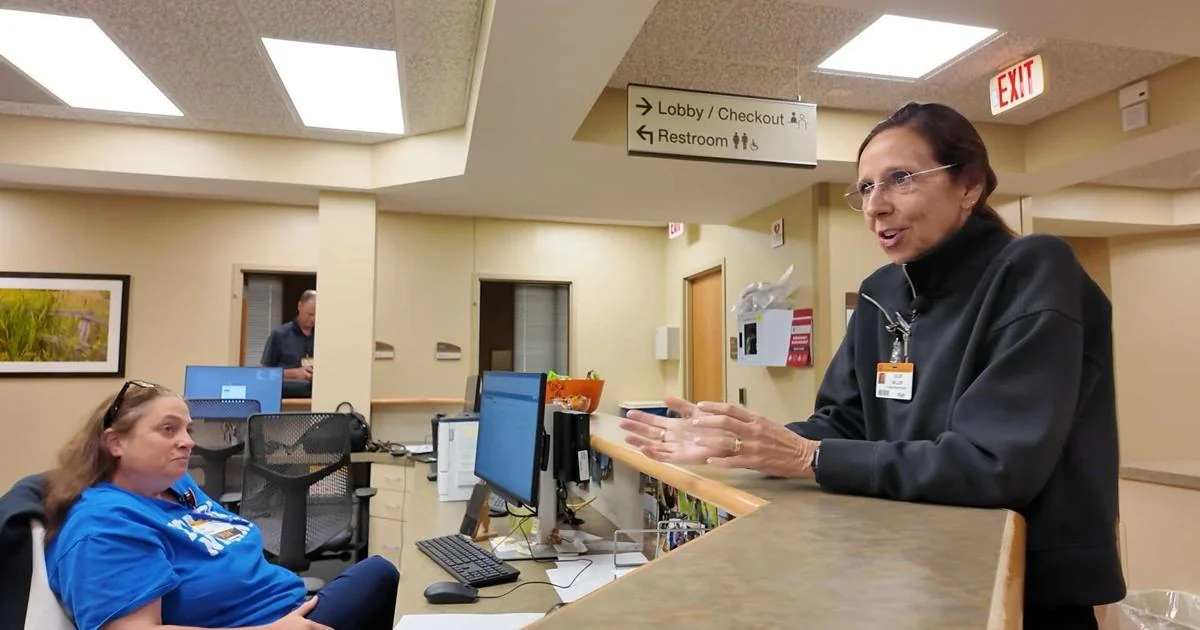
Julie Miller, a University of Missouri Sinclair School of Nursing professor who was involved in the clinic’s development, noted that recruiting and retaining healthcare providers in rural communities has historically posed significant challenges. She observed that physician providers frequently relocate to larger cities, whereas many of the providers she works with prefer to remain close enough to walk home during their lunch breaks.
“Nurse practitioners, on the other hand, especially those who come from rural areas, they want to stay at home,” Miller said. “They want to practice at home. That’s where they want to raise their families.”
According to Miller, this sense of belonging enables providers to participate more actively in community events and cultivate genuine relationships with the individuals they serve , something residents find particularly valuable.
“You develop a relationship with these people, and you know you can trust them,” Fletcher said.
The clinic also offers a distinct advantage for patients receiving care through other MU Health Care facilities. Its medical records system is fully integrated with University Hospital and other University of Missouri-owned and operated facilities, enabling providers to access patient records, test results, and pertinent medical information with ease.
Fletcher recounted how this integration proved critical during a recent health emergency. Following a visit to an emergency room in Jefferson City, where he was discharged without improvement, Fletcher sought care at the Holts Summit clinic the following day. Providers reviewed his medical history and strongly advised him to return for further evaluation.
“They looked over my charts and said, ‘You really need to go back.’ And so I did, and if I wouldn’t have, I may not have made it. They potentially saved my life,” Fletcher said.
Preparing the next generation of rural healthcare providers
The clinic also forms part of a broader initiative by Mizzou’s Sinclair School of Nursing to improve healthcare access throughout rural Missouri. A report from the Missouri Office of Rural Health revealed that while 33.2% of Missouri’s population resides in rural areas, only 21% of available healthcare providers serve rural counties.
Miller indicated that the school intends to utilize the clinic as a training site for graduate nursing students pursuing careers as advanced practice registered nurses, including nurse practitioners. The objective is to provide students with hands-on experience in a rural setting while cultivating relationships that may encourage them to pursue similar practice environments following graduation.
Full-time student clinical rotations have not yet commenced at the facility. Miller explained that patient volume must first increase to ensure students have sufficient opportunities to gain meaningful, practical experience. Since its opening, the clinic has averaged approximately 160 patient visits per month, with a target of reaching around 330 visits per month. Miller indicated that the school plans to reassess patient volume in May, with the possibility of welcoming students by the following fall.
Brian Jaouni, a graduate nursing student, shared that exposure to rural healthcare can substantially reshape students’ perspectives on their future professional paths.
“You may not think that rural health is what you want to do when you come out of school or when you go into school, but the rewarding aspects of what you see day to day with patient care and how you can really cultivate relationships in the community have been incredible for me,” Jaouni said.
Jaouni reflected that the opportunity to train in a community-based clinic earlier in his education could have influenced the direction of his career. He believes that expanding training opportunities in rural settings can meaningfully strengthen healthcare access and better equip future providers to serve those communities.
Keeping care close to home
At present, the clinic remains focused on growing its patient base and establishing itself as a reliable resource for Holts Summit and the surrounding communities. While it does not function as an urgent care center or emergency room, Miller noted that the clinic offers same-day appointments for patients with immediate primary care needs, including illnesses and minor health concerns. Patients may also establish ongoing care for annual wellness visits and the management of chronic health conditions.
Miller added that the clinic aims to serve residents who may face difficulties crossing the bridge for appointments, including families and older adults.
Fletcher expressed confidence that having a local healthcare option benefits the community as a whole.
“If we have one here rurally, and we can get right in and get things done, people get treated faster,” Fletcher said. “Everybody’s going to feel better.”