
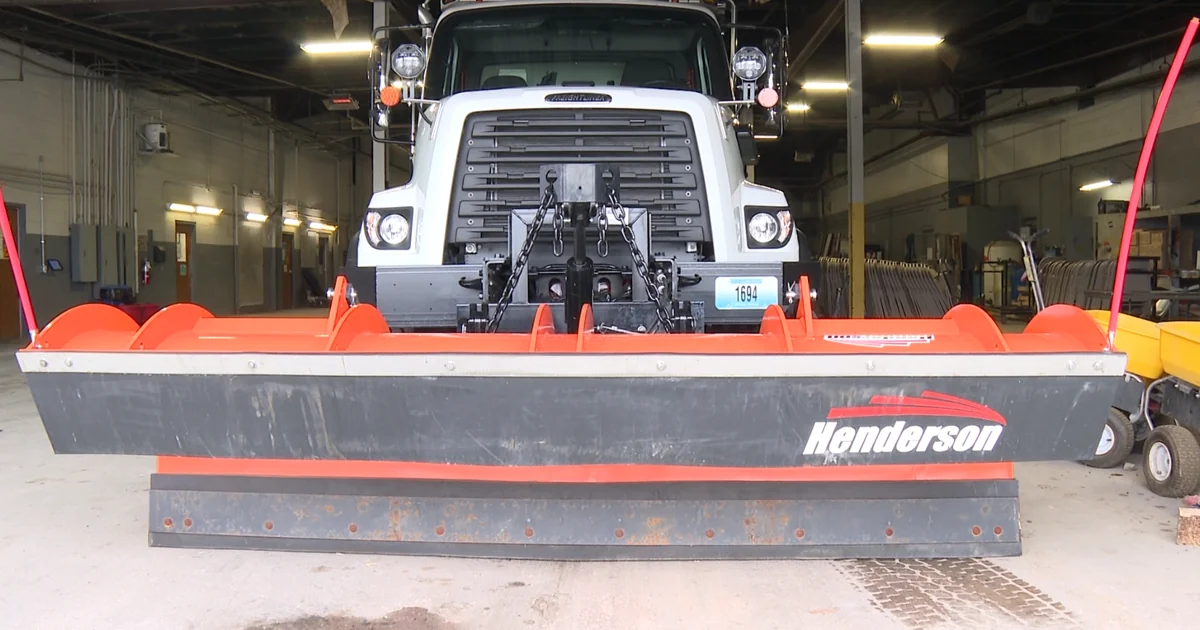
Columbia is taking proactive measures to prepare its snow plows and crews in anticipation of the upcoming winter season, with the goal of maintaining clear roadways and ensuring driver safety.
Richard Stone, Engineering and Operations Manager for the Columbia Public Works Department, emphasized that preparation is the foundation of an effective winter weather response.
“The best time to make decisions regarding winter weather is July 6 when it’s 95 degrees,” Stone said. “Almost all our trucks are ready to go.”
Earlier this month, Columbia’s Public Works crews completed their annual dry snow run, a routine exercise designed to familiarize plow drivers with their designated routes, assess street conditions, identify potential obstacles, and verify that all vehicles are operating safely.
Stone noted that the city is responsible for maintaining nearly 1,500 lane miles of roadway. Residents and drivers can consult the city’s interactive snow map to determine which streets fall under the various plowing priority categories.
Stone further explained that these priorities are subject to change based on snowfall totals.
“If it’s less than 4 inches, we’re focused on those first, second and third priorities 24/7,” Stone said. “If it’s more than 4 inches, then we’re plowing every street in Columbia.”
City officials also urged drivers to exercise caution when sharing the road with snow plows.
“Never pass a plow truck on the right-hand side because they really have a hard time seeing anything on the right-hand side of their vehicle,” Stone said. “If you can stay behind the plow truck, you’re probably gonna get to your destination more safely and quicker.”
City plow operator Lemikael Herneon stressed that patience is particularly critical when motorists find themselves traveling alongside plow vehicles.
The Missouri Department of Transportation advises drivers to maintain a following distance of at least four car lengths behind snowplows, as the snow displaced during plowing operations can generate a blinding cloud of debris that significantly reduces visibility for drivers traveling too closely.
Herneon also called on neighborhood residents to contribute to a smoother and more efficient plowing process.
“Please, park your cars in your driveways because that makes it a lot easier for us to clean your road,” Herneon said. “It’s way less of a chance of us potentially hitting your car. We do try to avoid that, but sometimes it gets real tight in these neighborhoods.”
Public Works officials indicated that between eight and thirty plow operators may be deployed at any given time, with additional personnel brought in as needed based on the severity of snowfall or ice conditions.
Even when crews apply salt to roadways, Stone cautioned that extremely cold temperatures can significantly diminish its effectiveness.
“Salt is really operationally effective to about fifteen degrees air temperature,” Stone said. “It will work below that but not very effectively.”
Stone affirmed that the city’s priority is to be fully prepared for significant winter weather events rather than be caught unprepared. He encouraged drivers to adopt a similar mindset by planning ahead, allowing for additional travel time, and giving snow plow operators the space they need to carry out their work safely and efficiently as winter weather conditions move into the region.