A Wednesday open house meeting brought Columbia residents together to help shape the direction of the city’s homelessness programs. The walk-in event was organized across several informational and interactive stations and was hosted by a Steering Committee composed of 16 community leaders representing local businesses, homeless shelters and outreach organizations, public safety departments, and other relevant sectors.
Sara Humm, a public health planner with the city, described the meeting as the culmination of months of dedicated research, deliberation, and community outreach.
“We did focus groups, one-on-one interviews with people who are currently homeless in our community,” Humm said. “We did a community roundtable here a few months ago where we had over 65 people who came and talked to us for an hour and a half about what matters to them.”
City staff are scheduled to begin drafting a strategic plan addressing homelessness in Columbia in December, with the open house serving as one of the final steps before the matter is presented to the City Council.
“This is one of those last steps before this goes to City Council,” Humm said, “to make sure we’re really feeling the pulse of the community , to know if we hit the nail on the head.”
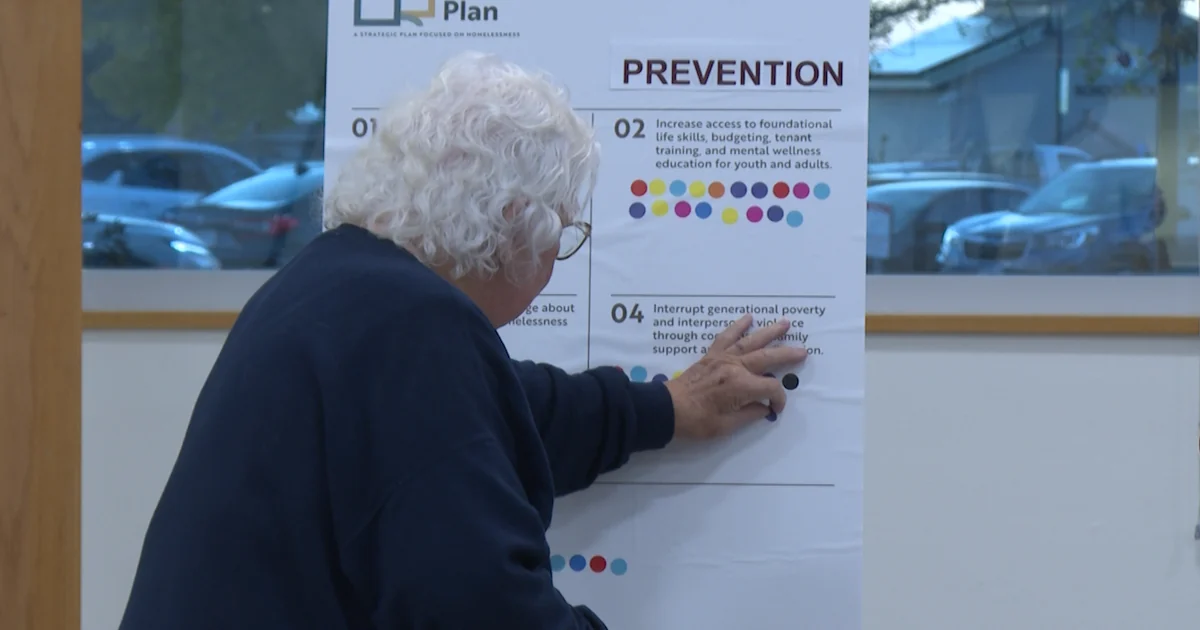
The open house was structured around seven stations covering four designated priority areas central to the city’s efforts to combat homelessness: prevention, crisis response, strengthening support, and housing and long-term stability. Attendees had the opportunity to review information at each station and engage directly with meeting staff. Following their review of the four priority areas, visitors selected two objectives they believed the city should prioritize within each area, registering their preferences through colored-circle stickers. At the conclusion of the event, participants could also indicate their overall level of support for the committee’s priorities and direction using a sticker-based horizontal spectrum.
According to the draft priorities published on the city’s website, approximately 700 interactions informed the Steering Committee’s development of each priority area, with the vast majority of contributions coming from members of the general public. The second-largest source of input came from individuals with lived experience, which, according to the draft, included people currently experiencing homelessness, those at risk of losing their housing, and individuals with prior lived experience of homelessness.
“We did over 40 one-on-one interviews with people in our community who are currently homeless,” Humm said, noting that these were conducted alongside round-table discussions with all of the aforementioned groups.
“I think the city did a very diligent job in providing as many different mediums to share feedback and input, whether that was face-to-face, online, in focus groups, one-on-ones,” Jessica McNear, shelter director for the Voluntary Action Center Opportunity Campus, said. “I think that they’ve done a really thorough job of collecting all of that feedback.”
McNear noted that the Opportunity Campus played a significant role in shaping the Steering Committee’s priorities, particularly in facilitating discussions with members of the unhoused community and individuals who utilize the shelter’s services. She identified one proposal as especially critical to preventing future hardship for those at risk of homelessness.
“Our overarching feeling is, we have to do something to get more affordable housing in Boone County,” McNear said. “Without affordable housing, we can do prevention, we can do education, we can address all of these other areas of mental health or substance abuse, public safety , but we have to have homes for people that are affordable and sustainable.”
McNear also drew attention to a concerning demographic trend, noting that older adults represent one of the largest and fastest-growing segments of the unhoused population in the area.
“That is the fastest growing population that we’re seeing coming into shelter,” she said. “…individuals who are on a fixed income, they’ve worked their whole life, they’ve retired, they’ve done everything right. The boomer generation is a very large generation, and we don’t have the infrastructure to support the number of seniors we’re seeing coming into the shelter, and it’s really sad.”
Local businesses also played a meaningful role in shaping the city’s future strategy. Nickie Davis, executive director of The District, was present at the open house. In May 2026, Davis submitted a letter signed by more than 70 local businesses urging the city to establish “a clear, publicly accessible, and enforceable Urban Camping Ordinance for our community.” She expressed concern that the city had not been sufficiently responsive to that letter.
“We’ve had not a lot of response from the city,” Davis said. “It was not taken up or talked about at all … the mayor did let us know that they were waiting for this homeless strategic plan to take place before they take any more steps. So, we are making sure that we are a part of this strategic plan in any way we can be.”
Davis nonetheless expressed appreciation for the open house format and the opportunity it afforded the public to weigh in on the city’s priorities.
“I think this event is great,” she said. “The way that they’re doing it is much more accessible to the public. This is not a two-hour sit-down meeting … I’d love to see more of this through the city.”
Although the public open house concluded at approximately 6:30 p.m. on Wednesday evening, the city’s efforts to gather community input are ongoing. A companion survey, accessible through the city’s website, remains open until Friday and allows residents who were unable to attend the meeting to vote on the same objectives and priorities.
“The goal is to hear what the community thinks, to hear what’s important to you, and really make sure that we’re hitting the nail on the head,” Humm said of the online survey, encouraging broad community participation.
Humm also confirmed that a second open house event would be held at a location chosen to maximize participation among those most directly affected by the strategic plan.
“We are doing this same event at the opportunity campus in a couple of weeks, so that we’re getting feedback directly from people who are experiencing homelessness,” she said. “We want to make sure we’re doing this with them as well, to make sure we are hearing their voices.”
Once the survey period and the follow-up open house are complete, city staff will proceed with drafting the Homelessness Strategic Plan. The plan is expected to be reviewed by the City Council in January, at which point the council may begin the process of developing ordinances to implement the selected objectives.