A law enforcement tool that has only been available for a few years may have prevented a family from experiencing a devastating loss after their 14-year-old son with autism went missing.
Officers from the Garland Police Department’s drone unit successfully located the boy, and the department released footage on Tuesday of the search operation to illustrate the practical value of drone technology in law enforcement.
The release of this video coincides with the continued expansion of the department’s drone program.
It was the first day in the field for Officer Michael Crick’s newly customized police vehicle, which was specially designed to support the department’s drone unit.
“So you’ll be able to see what I’m seeing on the screen, which is what the drone is seeing,” said Officer Michael Crick of the Garland Police Department.
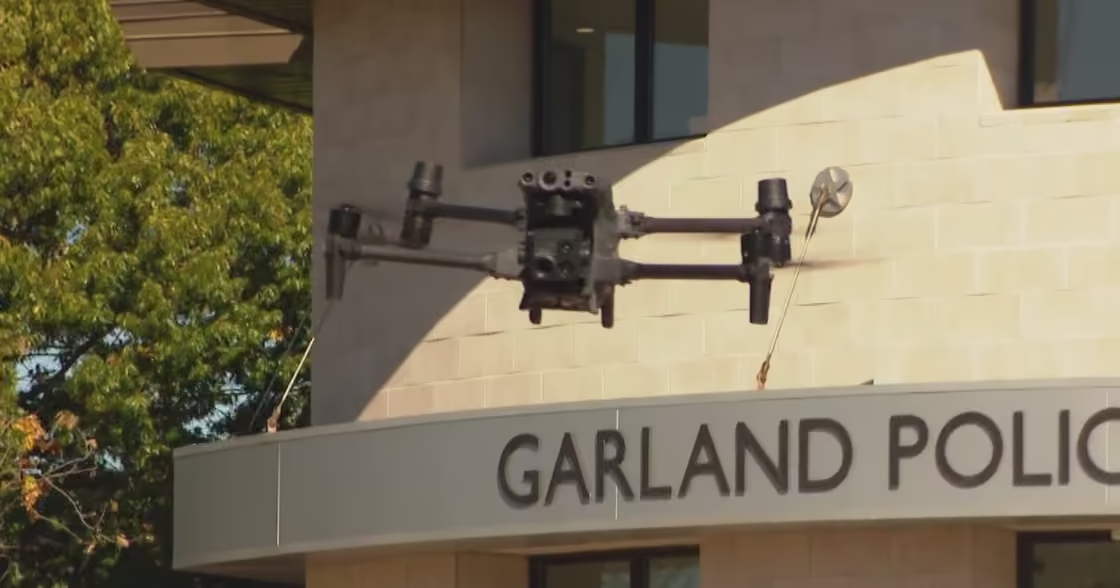
The Garland Police Department has been utilizing drones since 2019, though the introduction of the new vehicle reflects just how significantly the department has expanded its operational capabilities. The vehicle is equipped with a large foldout video screen that enables a second officer to monitor drone footage in real time, along with multiple power ports and generous storage compartments.
This technology assists officers in locating missing individuals and wanted suspects, and in certain situations, it can prove absolutely critical.
Last month, Garland police conducted a search for a 14-year-old boy with autism who had disappeared into a wooded area near his family’s residence, and the department released the footage of that operation on Tuesday.
Officer Crick promptly deployed one of his drones and utilized its thermal imaging camera to locate the boy as he moved through difficult terrain. He noted that the drone was able to locate the teenager far more quickly than officers would have been able to on foot.
“It definitely made sure that he got back home,” Crick said. “It’s always a rush. It’s almost the same when you find them on foot looking.”
The Garland Police Department currently operates a fleet of eight drones of varying sizes, each suited to different operational needs. Some of these drones can be controlled using a virtual reality headset, providing officers with a comprehensive aerial perspective of the surrounding area.
“I think they’re absolutely amazing,” Crick said. “I mean I’m an old dog trying to do new tricks out here, and I’m so ate up with them it’s ridiculous.”
Through the use of his headset, Officer Crick is now able to cover considerably more ground than he could during his 30-year career as a patrol officer.
He maintains that public opposition to drones on the grounds of privacy concerns is misguided, and that search-and-rescue operations such as the one conducted last month serve as a compelling demonstration of their value.
“They make the public safer. They make us safer,” Crick said.