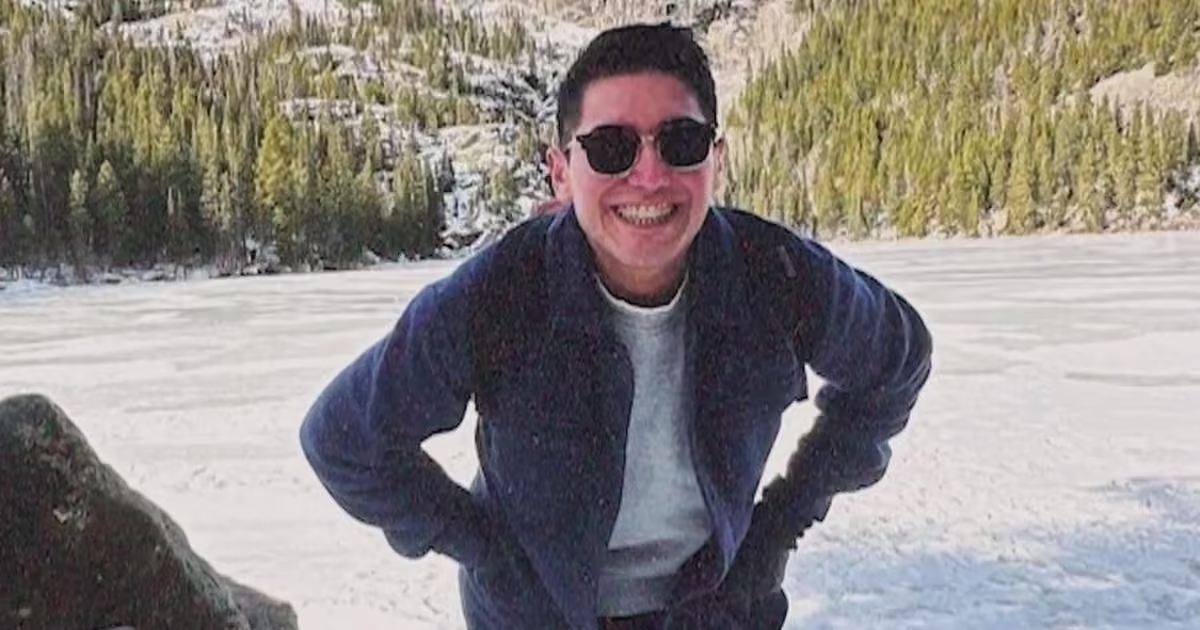
One year after making the difficult decision to leave the United States, a North Texas DACA recipient is reflecting on the life he left behind and the new one he is working to build in Mexico.
The Trump administration’s intensified immigration enforcement efforts have brought sweeping changes across the country. For Brenda and Danny Garcia, something as simple as sharing a cup of coffee no longer feels the same , a reminder of their close friend Kevin Barrera, whose absence is felt at every gathering.
“We keep in contact through text messages and FaceTime,” said Brenda Garcia. “Any event, it’s like, ‘Kevin should be there.’ We’re like, ‘OK, we need to FaceTime him, so that he is here with us.'”
Barrera chose to self-deport to Mexico in October 2025, after nearly two decades of living in the United States.
“It was something that we definitely understood, but it was hard,” said Danny Garcia.
Now residing in Mexico City, Barrera is actively working to establish a new life for himself.
“That was the hardest decision ever,” said Barrera. “I get flashbacks and memories of my routines and my days.”
Eight months prior to his departure, his mother was deported by U.S. Immigration and Customs Enforcement , a deeply painful event that would prove to be a turning point in his own decision-making.
“When you hear your mother going through such a hard time, and you physically can’t be there to support, it makes you spiral, and it makes you realize, the foundation we had was beautiful, and now it was taken away from us just because of a status,” he told CBS News Texas.
Barrera originally came to the United States as a child, after his mother fled a situation of domestic violence. A graduate of McKinney North High School, he was the first member of his family to earn a high school diploma. He subsequently received DACA protection, pursued college coursework, and held three jobs simultaneously. Notably, his DACA status remained active at the time he made the decision to leave.
Barrera indicated that his mother’s deportation, combined with the increasingly hostile climate toward immigrants, were the primary factors behind his choice.
“With the administration and everything that was going on, it was just getting horrible, especially at work,” said Barrera. “The judgment, the criticism, I felt like I wasn’t welcome.”
Together with his sister, who holds U.S. citizenship, Barrera was compelled to sell their home, their vehicles, and the majority of their possessions before departing.
“I was dealing with her [my mother’s] debt. I was dealing with her house. I had to cancel the insurance here; I had to make sure I did a garage sale,” he said.
Now, a full year since his departure, Barrera acknowledges that the reality of starting over has proven far more challenging than he had anticipated.
“When you think about it, in your mind, you’re playing it out, you’re like, ‘Okay, I got this. I know what steps I’m taking, but then reality hits and then the reality is that it’s like, ‘Oh my gosh, I wish I could go back to the U.S., to finish off my college degree, to finish off maybe finding a spouse or something,'” said Barrera.
The Department of Homeland Security reported that at least 2.2 million undocumented immigrants have voluntarily left the United States since January 2025. The agency acknowledged that this figure likely represents only a portion of those who have self-deported amid the administration’s broad immigration enforcement campaign.
“I don’t regret self-deporting,” Barrera said. “I did make it rational, but I did make it quick. I wish I could have taken my time to thoroughly think it out and say, ‘you know, I’m going to wait one more year.'”
While emphasizing that this path is not the right choice for everyone, Barrera maintains that it was the most appropriate decision for his family’s circumstances. As he continues to settle into life in his country of origin, he has taken up freelance work in advertising and supplements his income through online streaming.
“It is something that’s hard for me,” he said. “I miss my friends. I miss my colleagues.”
Despite the considerable distance from the life he once knew, Barrera remains determined not to allow these circumstances to diminish his spirit or sense of gratitude.
“I’m just really grateful for the time I had in Texas, and for the time I had in the United States, and the community, and the structure, and everything I built and all the accomplishments I accomplished,” he said.
Though separated by international borders, his friends Brenda and Danny Garcia have made clear their unwavering commitment to maintaining their friendship regardless of the miles between them.
“Obviously we wish things were different, but at the same time, we support him in everything,” said Brenda Garcia.
“That’s what we’re all hoping for… to be together again,” Danny Garcia said.