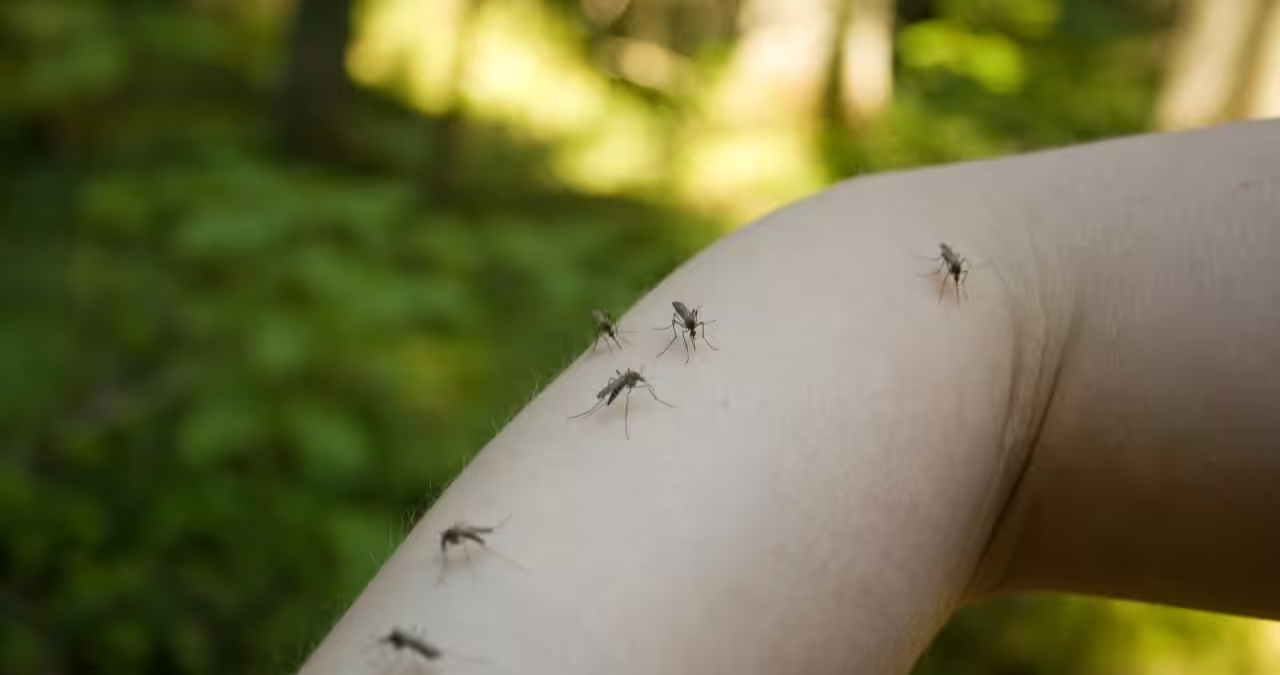
It begins with a faint hum , then a small shadow swooping around your ankles, a sharp sting on your arm and, before you know it, you’re swatting the air around you.
Across San Diego County, mosquitoes feel like they’re practically unavoidable this summer , and according to staff with the county’s Vector Control Program, that perception is well-founded.
Multiple parts of the county are dealing with elevated mosquito activity, leading Vector Control teams to ramp up surveillance and treatment efforts, said Donna Durckel, communications officer for the county Land Use and Environment Group.
So what’s behind the mosquito surge?
Hot, humid weather , and high tides
Durckel said the hot and muggy conditions this summer have produced conditions well-suited for mosquito breeding.
A series of unusually high tides has also fueled a rise in salt marsh mosquitoes in several coastal neighborhoods.
“The Vector Control Program moved quickly to address this increase in salt marsh mosquitoes, but some people may still be experiencing bites as their populations decrease,” Durckel explained.
July and August also coincide with the period when the county generally starts detecting more invasive Aedes mosquitoes near residential areas.
The combined factors have Vector Control crews occupied inspecting and treating mosquito breeding sites, especially in zones affected by the recent high tides and the resulting surge in salt marsh mosquitoes.
The mosquito that can bite during the day
Invasive Aedes mosquitoes continue to be a top worry for health officials since they bite aggressively and can potentially transmit illnesses including dengue.
They also behave differently from the mosquitoes most people grew up dealing with.
Aedes mosquitoes are active during daylight hours and typically target the ankles and legs. They also live and reproduce remarkably close to people , often right around homes.
And they require very little water to reproduce.
Some mosquitoes can deposit their eggs and develop in as little as a quarter inch of standing water , roughly the amount of water that can collect in a bottle cap.
That means a backyard doesn’t need a pond or large puddle to become a breeding ground.
Your backyard could be the problem
Mosquito breeding sites can range from large bodies of standing water, such as lagoons, to something as small as a saucer sitting underneath a plant.
One particularly problematic source is a landscaping drain.
“Landscaping drains can be an especially tricky source of mosquitoes because the water may not be easily visible,” Durckel said.
Residents can help by screening openings or regularly flushing out drains to prevent mosquitoes from breeding.
What Vector Control is doing
The county’s Vector Control Program regularly monitors and treats about 1,600 known sources of standing water that can breed mosquitoes throughout the county.
Some sites are treated from the ground, while others are treated by helicopter every three to four weeks during mosquito season.
When mosquito activity increases in a particular area, crews may visit more frequently to inspect and treat breeding sources and search for additional locations where mosquitoes may be reproducing.
Despite the term “spraying,” Durkel said most the county’s mosquito treatments are actually bacterial larvicides. The products are designed to target mosquitoes and are safe for people and the environment, according to county officials.
Vector Control also uses traps throughout the county to monitor mosquito populations and collect mosquitoes for disease testing.
High numbers in a trap , or mosquitoes testing positive for a disease such as West Nile virus , can prompt the county to increase its response in that area.
Four San Diego residents have tested positive for West Nile since June.
If mosquitoes are becoming a problem around a home, residents can request an inspection from Vector Control. A technician will come inspect the property for potential breeding sources and provide advice on how to eliminate them.
How long will mosquito season last?
Unfortunately for anyone hoping the buzzing will disappear soon, mosquito season in San Diego County can stretch through the summer and often into October when temperatures remain high.
Overall, mosquito numbers typically decrease as temperatures cool, Durkel explained.
In areas experiencing localized increases, populations should also decline as Vector Control crews locate and treat the sources where mosquitoes are breeding.
For residents, however, the message is simple: don’t overlook the smallest puddles.
A bottle cap’s worth of standing water may be all it takes to turn a quiet corner of your yard into a mosquito nursery.